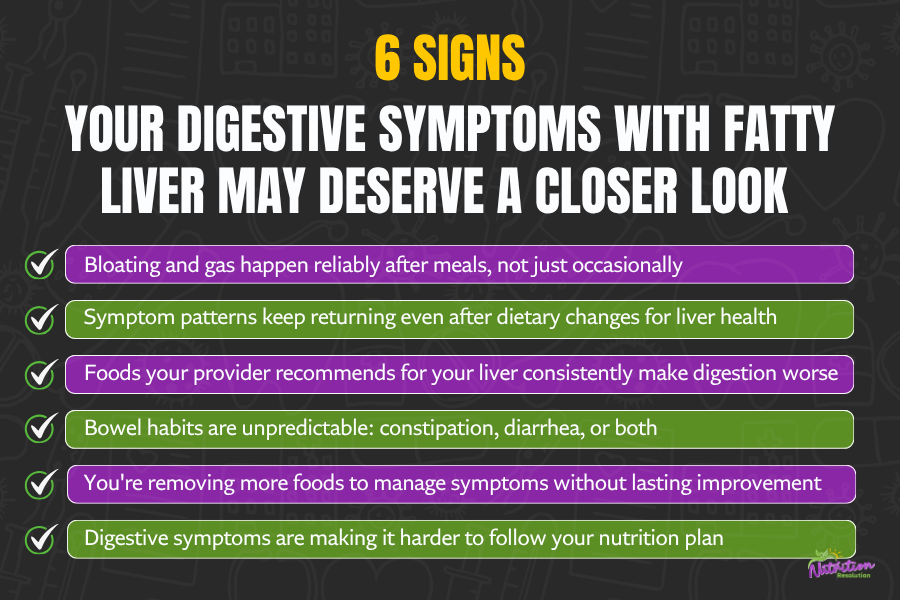
You’ve been working on your fatty liver, changing what you eat and trying to follow the advice you’ve been given. But you’re still bloated after meals, dealing with gas, or never quite sure what your bowels are going to do. Maybe some of the foods you’re encouraged to eat actually make you feel worse.
Could there be a digestive issue that deserves attention alongside your liver health?
A study published in May 2026 found that nearly two-thirds of participants tested positive for small intestinal bacterial overgrowth, or SIBO. These were people who had both fatty liver disease and digestive symptoms, an important detail when interpreting that number.
If you already know about SIBO, the liver connection may be new to you. And if you’ve mainly been focused on fatty liver, this may give you another question to ask about your digestion. Either way, the findings give us a reason to look more closely at how the two fit together.
Looking for Help With What to Eat?
If bloating and digestive discomfort are making meals difficult, our free SIBO diet plan gives you practical food and meal ideas to get started.
What Did the New Study Find About Fatty Liver and SIBO?
In a study published in May 2026, researchers evaluated 2,549 people with fatty liver disease and digestive symptoms. They found that 66.3% tested positive for SIBO, nearly two out of every three participants.
SIBO means there are too many bacteria in the small intestine, where most digestion and nutrient absorption happen. Those bacteria can ferment the food you eat, contributing to gas, bloating, and other digestive symptoms.
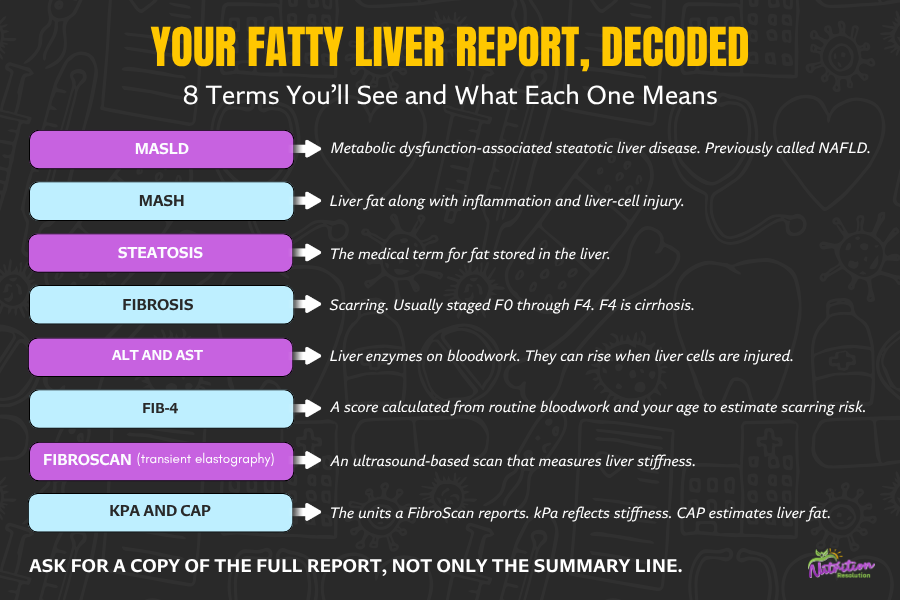
The fatty liver diagnosis in this study was metabolic dysfunction-associated steatotic liver disease, or MASLD. You may know it by its previous name, nonalcoholic fatty liver disease (NAFLD). This is when fat builds up in the liver alongside issues such as insulin resistance, elevated blood sugar, or other metabolic risk factors.
The researchers used lactulose breath testing to measure hydrogen and methane gases produced by gut microbes, looking for patterns consistent with SIBO. They also used a liver scan called transient elastography to assess liver fat and stiffness. Because scar tissue makes the liver stiffer, the scan helped them estimate how much scarring was present, which helped them assess how advanced the liver disease was. Together, these tests let them ask: was intestinal overgrowth more common in people with more advanced liver disease?
And that’s where the findings get especially interesting. Positive tests increased from 65.9% in participants with fatty liver without the more advanced features to 72.8% in the group classified as having at-risk MASH, and 78.9% in those with cirrhosis. MASH involves inflammation and liver-cell injury, while cirrhosis is a more advanced stage of liver disease marked by extensive scarring.
SIBO was common across all the liver disease categories studied, and became even more common as liver disease severity increased. That doesn’t tell us whether SIBO contributed to the liver changes, whether liver disease made SIBO more likely, or whether both were happening. But it gives us another reason to consider digestive health alongside liver health.
Now, everyone in this study already had digestive symptoms. So we can’t take that number and say that two-thirds of all people with fatty liver have SIBO. But if you have fatty liver and you’re also dealing with persistent bloating, excessive gas, abdominal pain, feeling full quickly when you eat, or changes in your bowel habits, this finding deserves your attention.
How Do You Know How Advanced Your Fatty Liver Is?
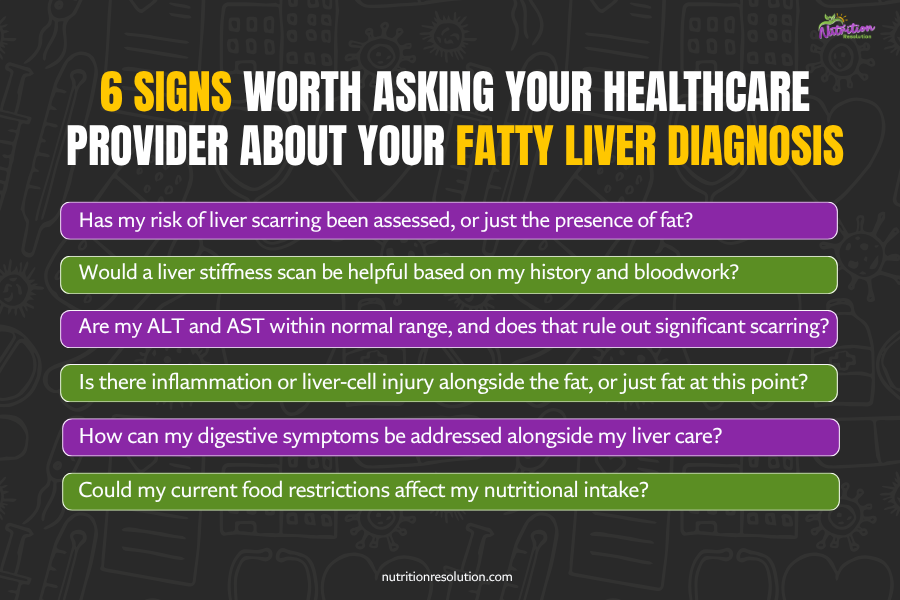
Your clinician uses your medical history, bloodwork, and, when appropriate, scans or other tests to assess your liver health. Finding fat in the liver is one piece. Understanding whether there’s also inflammation, liver-cell injury, or scarring helps determine what care you need.
The categories we just discussed describe different changes. Fatty liver can involve excess fat without the inflammation and liver-cell injury seen in MASH. Cirrhosis is a more advanced stage marked by extensive scarring. Not everyone with fatty liver develops MASH or cirrhosis.
You may already have had blood tests for ALT and AST, often called “liver enzymes.” These can rise when liver cells are injured, but they don’t directly measure liver fat or scarring. And normal results don’t rule out advanced disease. Your clinician may also use a calculation based on routine bloodwork to estimate scarring risk and decide whether a liver stiffness scan or further assessment would be helpful.
So if you’ve been told you have fatty liver, a useful question is, “Have we assessed my risk of liver scarring, and would a liver stiffness scan be helpful?”
How Are Your Gut and Liver Connected?
Your gut and liver have a direct connection through a blood vessel called the portal vein. Blood carrying nutrients absorbed from your intestines travels to your liver, where those nutrients are processed, stored, or sent out for your body to use. That blood can also carry substances produced by your gut microbes, some beneficial and others that can contribute to inflammation. So what happens in your intestines can affect what reaches your liver.
Your intestinal lining allows nutrients to be absorbed while helping keep bacteria and potentially harmful substances contained in the gut. Mucus and immune defenses help protect that barrier.
If the gut lining becomes less effective as a barrier, more substances from bacteria can pass through it and enter the blood traveling to your liver. Once there, some of those substances can trigger an immune response and inflammation in the liver itself.
That’s one way changes in gut microbes may affect liver health. Researchers are investigating whether this process contributes to fatty liver disease. The high rate of SIBO in this study gives us another reason to explore that connection, although the researchers didn’t directly test whether substances from gut bacteria reaching the liver and triggering inflammation were responsible for the association they observed.
Your liver can affect your gut, too. One example is bile, a fluid your liver makes and releases into your digestive tract. Bile helps you digest fats, but it also helps keep bacteria from overgrowing in the small intestine.
So if your liver makes too little bile, or bile isn’t reaching the intestine properly, bacteria may have more opportunity to overgrow. That’s one way a problem with the liver or bile flow can contribute to problems in the gut. Having fatty liver doesn’t automatically mean this is happening, but it helps explain why we look at the relationship in both directions.
We know your gut and liver affect each other. What we’re still working out is how much SIBO contributes to fatty liver disease and whether addressing SIBO can improve liver health. For me, the takeaway is this: if you have fatty liver and ongoing digestive symptoms, don’t assume those symptoms are something you just have to live with. SIBO or another issue we can address may be contributing to how you feel. Having fatty liver doesn’t mean you have to accept bloating, discomfort, or unpredictable bowel movements as your normal.
Does SIBO Cause Fatty Liver Disease?
Research suggests that gut microbes may play a role in fatty liver disease. But we don’t yet know whether SIBO causes fatty liver or makes existing fatty liver worse.
Researchers have also asked whether changing gut bacteria could improve liver health. One small trial tested rifaximin, an antibiotic also used for SIBO, in people with MASH, the form of fatty liver that involves inflammation and liver-cell injury. The researchers found improvements in liver enzymes and inflammatory markers. However, another small study didn’t find a benefit.
Those findings give us a reason to keep investigating. They don’t establish that clearing SIBO removes fat from the liver or reverses liver damage.
But improving your digestive symptoms is valuable in its own right. If SIBO is contributing to your bloating, discomfort, or bowel problems, we can address it and build a plan that supports your digestion alongside the care you’re receiving for your liver and metabolic health.
What Are the Symptoms of SIBO?
Symptoms associated with SIBO include bloating, excessive gas, abdominal discomfort, diarrhea, and constipation. Some people also experience upper digestive symptoms such as reflux, feeling full quickly when eating, or nausea. If these symptoms are affecting what you eat or how you plan your day, it’s worth investigating what’s behind them.
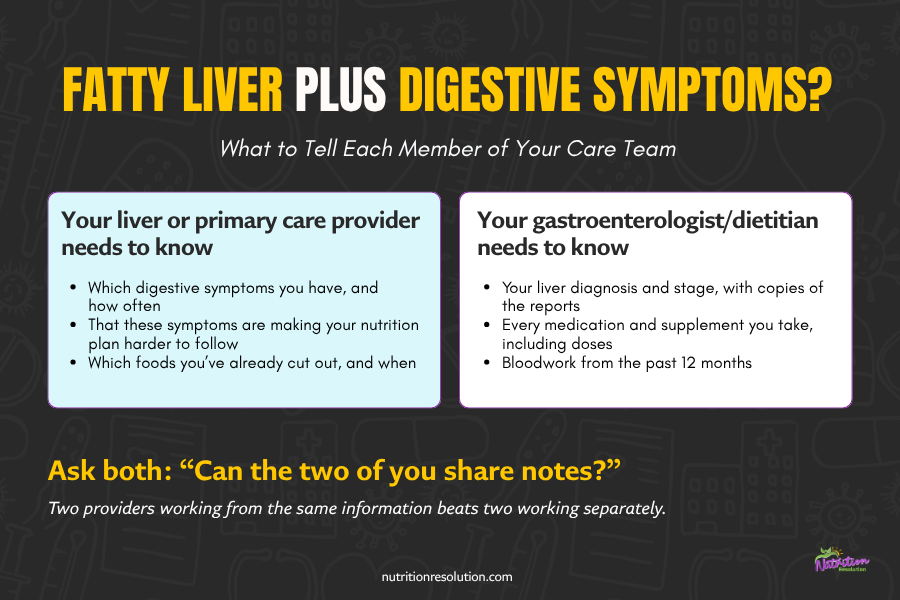
When someone comes to our practice, I look at when symptoms happen, how their bowels are functioning, and how symptoms are changing what they eat. Those details help us decide what to investigate.
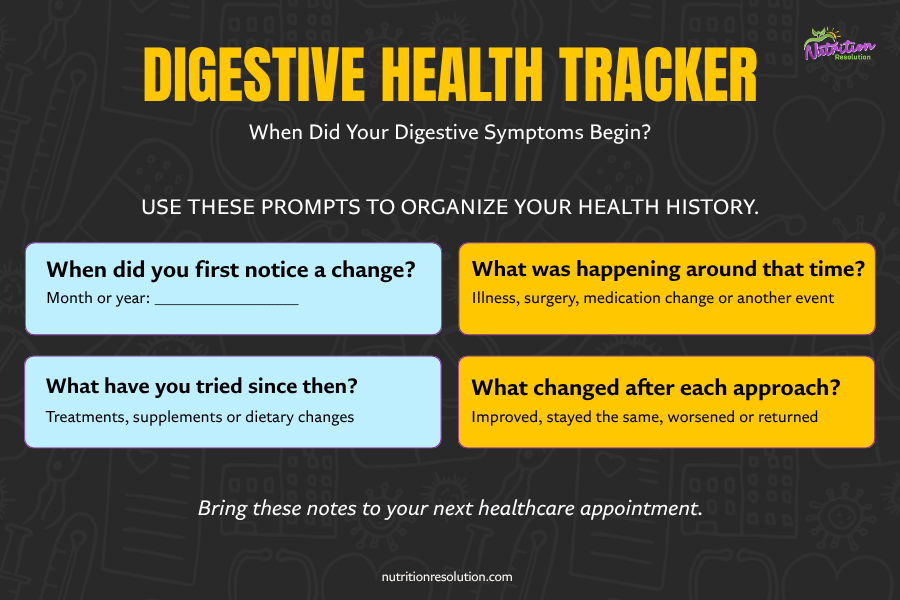
I also want to understand how the symptoms began. Did they start after a stomach infection, abdominal surgery, or a medication change, or did they develop gradually? That timeline helps us identify possible contributors and decide what needs a closer look.
If someone has already tried antibiotics, dietary changes, or supplements, I want to know what improved and how long the improvement lasted. Temporary relief followed by returning symptoms raises different questions than an approach that never helped. That history helps us decide what to reassess instead of simply repeating what they’ve already tried.
Symptoms alone can’t tell us whether you have SIBO because several digestive conditions can cause similar symptoms. In our practice, we use breath testing alongside your symptom patterns and health history to look for patterns of intestinal overgrowth consistent with SIBO.
If we find patterns of intestinal overgrowth, that gives us something specific to address instead of asking you to keep avoiding foods to control your symptoms. We also investigate what may be allowing the overgrowth to persist or return. Your plan then addresses both the overgrowth and those contributing factors, with the aim of helping you feel better and comfortably eat a wider range of foods.
Should You Get Tested for SIBO If You Have Fatty Liver?
Having fatty liver alone doesn’t automatically mean you need SIBO testing. But if you’re also dealing with ongoing bloating, gas, abdominal discomfort, or changes in your bowel habits, it’s reasonable to consider whether testing could help explain your symptoms.
This becomes especially relevant when symptoms keep coming back, you’re cutting out more foods to stay comfortable, or the changes you’ve already tried haven’t brought lasting relief.
Breath testing is a noninvasive way to look for evidence of intestinal overgrowth. After drinking a measured amount of a test sugar, you collect breath samples at timed intervals. The test measures gases produced by microbes, typically hydrogen and methane, and in some cases, hydrogen sulfide, and the amounts and timing help us interpret the results.
If you’ve already had a negative SIBO test but still have persistent symptoms, it’s worth having someone experienced in SIBO review how you were tested. A negative result can be useful, but certain testing methods can miss overgrowth. In our practice, we look closely at those details before deciding whether SIBO has been adequately evaluated or whether another approach would give us better information.
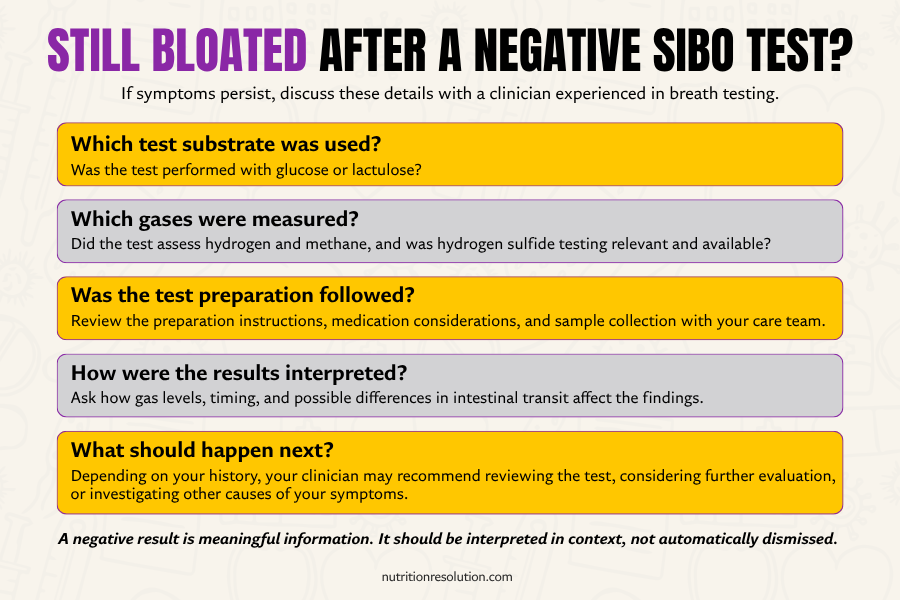
In our practice, we get pretty nuanced with breath testing because the details matter. The sugar used for the test, called the substrate, is one example. Glucose is absorbed relatively early in the small intestine, so it can miss overgrowth farther down. Lactulose isn’t absorbed, allowing it to travel through the small intestine and reach the colon. That gives us different information, but it also means we have to distinguish possible small-intestinal fermentation from the fermentation we expect once it reaches the colon.
That distinction depends partly on how quickly lactulose moves through the small intestine. If it reaches the colon quickly, normal fermentation there can produce an earlier rise in gas. So we consider whether rapid or slow transit could be affecting the results. As part of our broader evaluation, separately from the breath test, we may ask you to eat a food that’s recognizable in your stool and track how long it takes to appear. This gives us a rough estimate of your overall transit time.
We also review the preparation, how the breath samples were collected and handled, which gases were measured, and the timing of the samples. We look at the actual gas pattern alongside your symptoms rather than relying only on the word “positive” or “negative” on a report.
If a test is negative but there’s still good reason to suspect overgrowth, we review whether the testing method could have missed it and whether another test would be useful. We also stay open to other explanations. That’s where experience with SIBO matters: knowing what a test can tell us, what it might miss, and how to use that information to guide your next step.
When we find evidence of SIBO, the test results help us choose an approach to address the overgrowth, which may include coordinating with your prescriber on antibiotics or considering an herbal protocol or elemental diet. At the same time, we work on how your digestion is functioning, from feeling overly full after meals to constipation, diarrhea, or difficulty fully emptying your bowels. We adjust your plan to support more regular, comfortable bowel movements and reduce fermentation-related gas while we address the overgrowth. We also make sure you’re meeting your nutritional needs, especially if you’ve been restricting foods to control symptoms.
As symptoms improve, we help you gradually bring foods back in and check how you’re responding. We adjust your plan based on your symptoms, food tolerance, and follow-up testing when appropriate, so we can see what’s improving and what still needs attention. We want that progress to translate into more comfortable meals, a wider range of foods, and less of your day spent managing your digestion.
Ready to Find Out What’s Behind Your Symptoms?
Wondering whether SIBO is contributing to your symptoms? Our Healthy Gut Restoration Program helps you access breath testing, understand your results, and know what to do next. With a dietitian guiding you, we address intestinal overgrowth when present, support better digestion, and help you expand your food choices with nutrition strategies that support both gut and liver health.
What If Foods Recommended for Fatty Liver Make You Feel Worse?
This is a common frustration: you’re trying to eat more beans, vegetables, fruit, and whole grains for your liver health, but those meals leave you bloated, gassy, or uncomfortable. That doesn’t mean you can never eat those foods again. It means we need to understand why your gut isn’t tolerating them.
The high rate of SIBO in this study gives us another reason to investigate that possibility in people with fatty liver and digestive symptoms. Certain carbohydrates in these foods can be fermented by bacteria, producing gas. When SIBO is present, that fermentation can happen in the small intestine and contribute to symptoms. The foods aren’t causing SIBO, but they may make you feel worse when it’s there.
And that leaves you in an incredibly frustrating position. The foods you’re being encouraged to eat for your liver, blood sugar, and metabolic health are the same foods you’re struggling to tolerate. Simply telling you to eat more fiber doesn’t solve that problem. Neither does giving you an ever-growing list of foods to avoid.
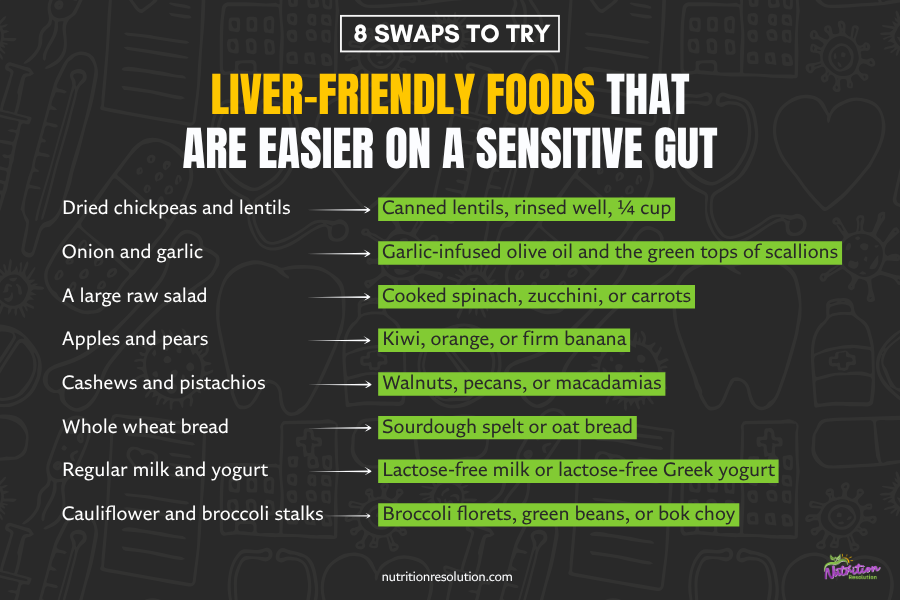
While we investigate what’s happening, we can make eating more manageable. Smaller portions of certain foods may be more comfortable than larger servings. You might tolerate cooked vegetables better than a big raw salad. We can also use a FODMAP approach to identify which fermentable carbohydrates trigger symptoms and adjust the amounts or choose alternatives, while preserving as much variety and nutrition as possible. This is meant to include food reintroduction and personalization, rather than ongoing restriction.
Our 30-day low-FODMAP diet plan explains these foods and how to adjust them while keeping meals balanced. These adjustments can help you feel more comfortable and stay nourished while we investigate what’s contributing to your symptoms. Reacting to high-FODMAP foods doesn’t automatically mean you have SIBO, and a low-FODMAP diet doesn’t clear the overgrowth itself.
In our practice, we routinely help clients bring previously troublesome foods back into their meals as their digestion improves. If we find patterns of intestinal overgrowth, we address those alongside bowel function and other contributing factors, then gradually expand the diet based on how you respond. We’re working toward being able to comfortably eat more of the beans, vegetables, fruits, whole grains, nuts, and seeds that make a Mediterranean-style eating pattern useful for liver and metabolic health.
What Can You Do If You Have Fatty Liver and Ongoing Digestive Symptoms?
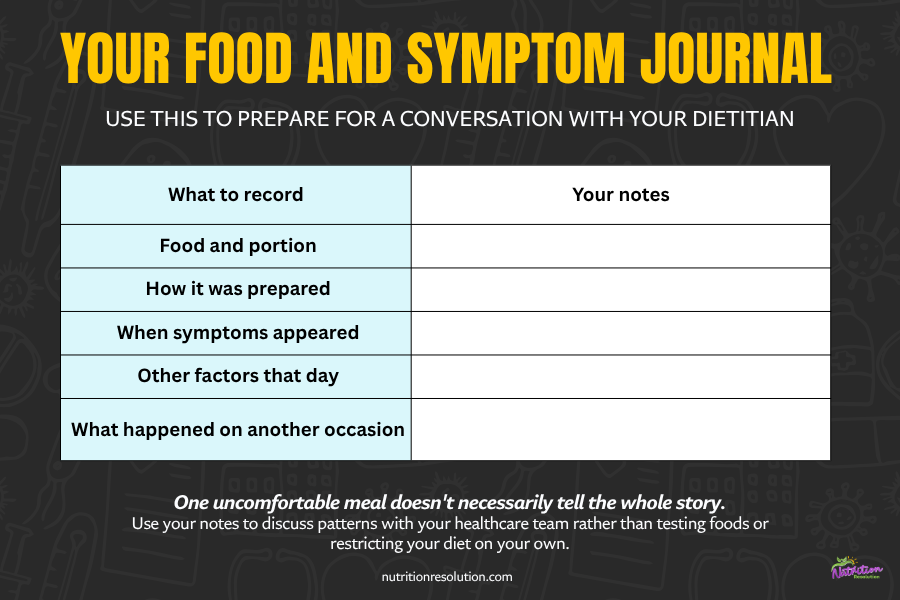
Keep working with your healthcare team on your liver health, and make persistent digestive symptoms part of that conversation. If bloating, discomfort, or unpredictable bowel movements are making it difficult to follow your nutrition plan, getting help with your digestion can make that plan more manageable.
What I find encouraging about this research is that it opens up another avenue to investigate. It gives us a reason to ask whether something has been missed, particularly if you’ve been making changes but still don’t feel well.
You don’t need to figure out on your own whether it’s SIBO, which test to request, or which foods to remove next. That’s work we can help you through. At Nutrition Resolution, we bring your symptoms, testing, food tolerances, and response to previous approaches together to decide what makes sense for you, then guide you through the plan and adjust it as you progress.