Why “Detox” Needs a Rebrand

We hear a lot about “detoxing” these days, but here’s the truth: your liver is detoxing 24/7—no juice cleanse required. Its job is to break down toxins, hormones, and waste so your body can safely clear them out. But when your liver gets overwhelmed—whether from processed foods, environmental exposures, or imbalances in your gut—it can fall behind, and that’s when subtle (and not-so-subtle) symptoms start to creep in.
In my practice, I see a lot of people who feel stuck in a frustrating cycle: they know something’s off, but typical “detox” advice either feels too extreme or totally misses the mark. That’s because real detoxification is about building up your body’s natural systems, not breaking them down with harsh cleanses or restrictive diets. A big part of that involves understanding the deep connection between your liver and your gut microbiome, which work hand-in-hand to keep inflammation and toxins in check.
So if you’ve been wondering whether your body is waving a red flag, let’s look at 10 signs your liver might be asking for more support—and what those signs really mean for your health. (And if you’re ready to take action, don’t miss the free 7-Day Detox Diet Plan I’m sharing below—it’s packed with practical ways to support your liver and gut naturally.)
👉Download Your Free 7-Day Detox Diet Plan
Why Is There So Much Confusing (and Bad) Info About Detoxing?
Let’s be real—if you’ve ever Googled liver detoxing, you’ve probably seen everything from extreme juice fasts to claims that you don’t need to detox at all. It’s no wonder people feel stuck and unsure who to trust. The truth is, detox has become a buzzword that’s often used to sell products or programs that promise quick results but don’t address the real issue. On the flip side, conventional medicine tends to dismiss detoxing altogether, focusing only on disease, not the gray area where you might feel “off” but aren’t technically sick.
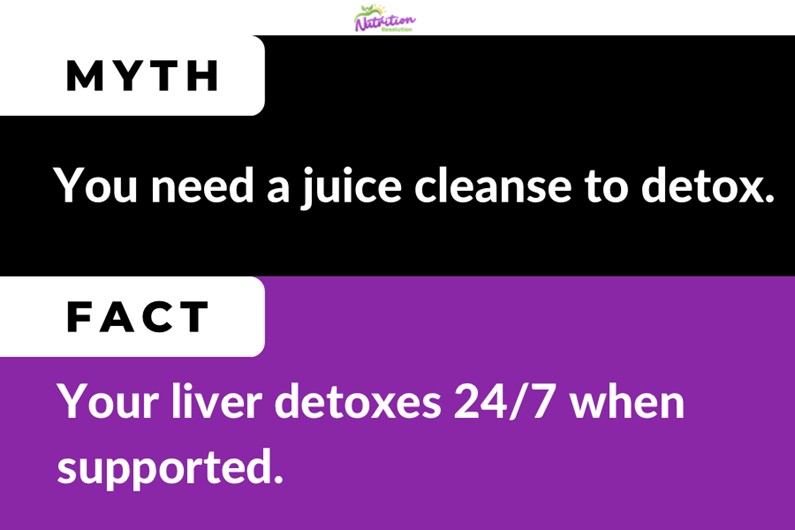
And let’s be honest—part of the appeal of harsh detoxes is that they feel powerful. When you’re feeling bloated, fatigued, or just “off,” it’s tempting to think your body needs a total purge, like flushing out a clogged filter. There’s even an emotional side to it: a desire to wipe the slate clean, hit reset, and feel renewed. But while that fantasy sells products, it’s not how real detoxification works. Your liver and gut thrive on steady, sustainable support, not on extremes that can leave you more depleted in the long run. In my practice, I focus on that in-between space—where your body is showing signs of imbalance, and you need practical, supportive steps to get back on track. Detoxing, when done right, is about strengthening your natural pathways, not punishing your body or making you fear food. That’s exactly why I created my 7-Day Detox Diet Plan—to give you a realistic, food-friendly roadmap for supporting detox pathways the right way.
Here’s What to Watch For
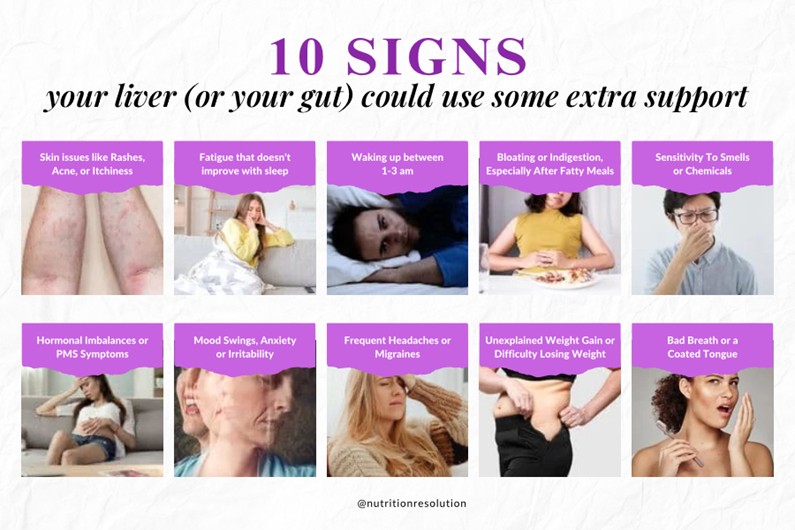
So, how do you know if your liver might be struggling? While no single symptom is proof on its own, your body is always sending clues. These are some of the most common signs I see in my practice that suggest your liver (and often your gut) could use extra support. These symptoms can be subtle at first, but paying attention to early signs can go a long way in preventing reduced liver function down the road.
1. Skin Issues Like Rashes, Acne, or Itchiness
Your skin is one of your body’s main detox pathways, so when your liver and gut aren’t processing waste efficiently, it can contribute to inflammation and hormone imbalances that often show up through the skin. It’s one reason why stubborn adult acne, eczema, or psoriasis often flare up when your detox systems are under pressure.
In my practice, I often see these skin issues improve once we address both liver and gut health together. Why? Because an overburdened liver usually goes hand-in-hand with imbalances in the gut microbiome and leaky gut, which can fan the flames of skin inflammation. The good news: real detox support focuses on rebuilding these pathways from the inside out, not relying on quick-fix creams or harsh cleanses.
2. Fatigue That Doesn’t Improve With Sleep
We all feel tired sometimes, but if you’re getting decent sleep and still feel sluggish, it might be more than just a busy schedule. When your liver is bogged down, your body has to work harder to clear out waste. When your detox pathways are under strain, the effects can ripple outward—contributing to fatigue, sluggish metabolism, and inflammation-related symptoms that affect how you feel overall. It’s the kind of tired that doesn’t lift, no matter how much rest you get.
In my practice, we often see energy levels rebound when we focus on lightening the liver’s load and supporting gut health at the same time. Remember: your body’s detox systems burn through a lot of nutrients, so making sure you’re nourished (not just “clean”) is key to getting your energy back.
3. Waking Up Between 1–3 AM
If you’re waking up at the same time every night—especially between 1 and 3 AM—it might not be a coincidence. In Traditional Chinese Medicine, this window is linked to the liver’s natural detox and repair cycle. While modern science doesn’t map exactly the same way, we do know your body is hard at work overnight processing toxins, balancing hormones, and repairing tissues.
In my experience, middle-of-the-night waking is often a clue that your detox systems (especially your liver and gut) are under pressure. We also see this pattern a lot with histamine intolerance, where poor detox capacity makes it harder for the body to clear histamine, causing restless sleep or sudden wake-ups. The good news: when we focus on balancing blood sugar, supporting liver pathways, and calming the nervous system, sleep tends to deepen—and those frustrating wake-ups become less frequent.
4. Bloating or Indigestion, Especially After Fatty Meals
If you find yourself feeling bloated, heavy, or uncomfortable after eating rich or fatty foods, your liver (and gallbladder) may be waving a flag. One of the liver’s key jobs is to produce bile, which helps break down fats and move waste out of the body. When bile flow is sluggish, digestion can feel sluggish too, leading to bloating, gas, and that “food just sits there” feeling.
In my practice, we often see these symptoms improve with gentle bile flow support—using the right foods, herbs, and habits to encourage natural digestive function. If this sounds familiar, check out our 7-Day Detox Diet Plan (and check out my Detox Juice recipe, which includes dandelion and ginger—two natural ingredients known to support digestive comfort and help relieve symptoms like bloating or sluggish digestion.
When bile flow is supported and digestion improves, many people also notice clearer skin, smoother digestion, and even fewer signs of liver detox symptoms like bloating and heaviness after meals.
5. Sensitivity to Smells or Chemicals
If you feel overwhelmed by strong smells—like perfume, gasoline, or cleaning products—or if alcohol hits you harder than it used to, your liver might be signaling that it’s having trouble keeping up. That’s because your liver is responsible for breaking down not just food toxins, but also environmental chemicals. When detox pathways are sluggish, your tolerance to everyday exposures can drop. In my practice, we see this often in people with chronic gut issues or histamine intolerance, where the detox load is already higher than average. Supporting your liver with key nutrients and gentle detox strategies can make a huge difference, and we lay out practical steps for this in the 7-Day Detox Diet Plan linked below.
👉Download Your Free 7-Day Detox Diet Plan

6. Hormonal Imbalances or PMS Symptoms
Your liver plays a key role in breaking down excess hormones, especially estrogen, so when detox pathways are sluggish, hormone imbalances can sneak up. This might look like heavier or more painful periods, breast tenderness, mood swings, or stubborn weight around the midsection.
We often find that liver health is the missing piece for people dealing with chronic PMS or estrogen dominance. Supporting detox pathways can help your body clear excess hormones more efficiently, which often leads to steadier cycles and fewer frustrating symptoms over time.
7. Mood Swings, Anxiety, or Irritability
Believe it or not, your liver health can impact your mood. That’s because when your liver is overloaded, toxins and metabolic waste can build up in the body, sometimes triggering inflammation that affects the brain and nervous system. The result? You might feel more anxious, irritable, or emotionally “off” without a clear reason.
I’ve worked with many clients who feel stuck in a cycle of gut and hormone imbalances, where detox pathways are under strain. One of the most rewarding things about supporting liver health is watching not just physical symptoms improve, but mood and mental clarity as well.
8. Frequent Headaches or Migraines
Recurring headaches or migraines can have many root causes, but sluggish detoxification is often an overlooked factor. Your liver helps clear out not just food toxins but also byproducts of hormones, medications, and environmental exposures. When waste builds up faster than it can be cleared, inflammation can rise, and headaches are a common side effect.
It’s remarkable how often stubborn headaches ease up when liver and gut support are part of the bigger picture. If headaches are part of your pattern, detox support may be the missing link.
9. Unexplained Weight Gain or Difficulty Losing Weight
Struggling with weight that just won’t budge? While many factors affect weight, your liver plays a bigger role than most people realize. When liver function is compromised, it can interfere with hormone metabolism, like insulin clearance, making it harder for the body to regulate weight and maintain metabolic balance.
It’s common to see weight loss plateaus start to break when we focus on improving liver function alongside gut health, blood sugar balance, and sustainable nutrition strategies. In some cases, bacterial overgrowth and gut-driven inflammation (like SIBO) can play a hidden role too, making detox even harder and weight loss even trickier. (I wrote more about that connection here).
10. Bad Breath or a Coated Tongue
Bad breath that lingers (even with good oral hygiene) or a thick white coating on your tongue is often linked to imbalances in the gut, especially yeast or bacterial overgrowth.
But here’s where your liver comes in: while your immune system helps keep microbes like candida in check, your liver also plays a role in clearing what those microbes leave behind. When your detox systems are under pressure, that buildup can sometimes show up in subtle ways, like bad breath or a coated tongue.
That’s why we focus on both gut health and liver support to help clear the root cause, not just mask the symptom. It’s one of those small but satisfying shifts that tells you your detox systems are finally getting back on track.
The Gut-Liver Connection: Why You Can’t Talk About One Without the Other
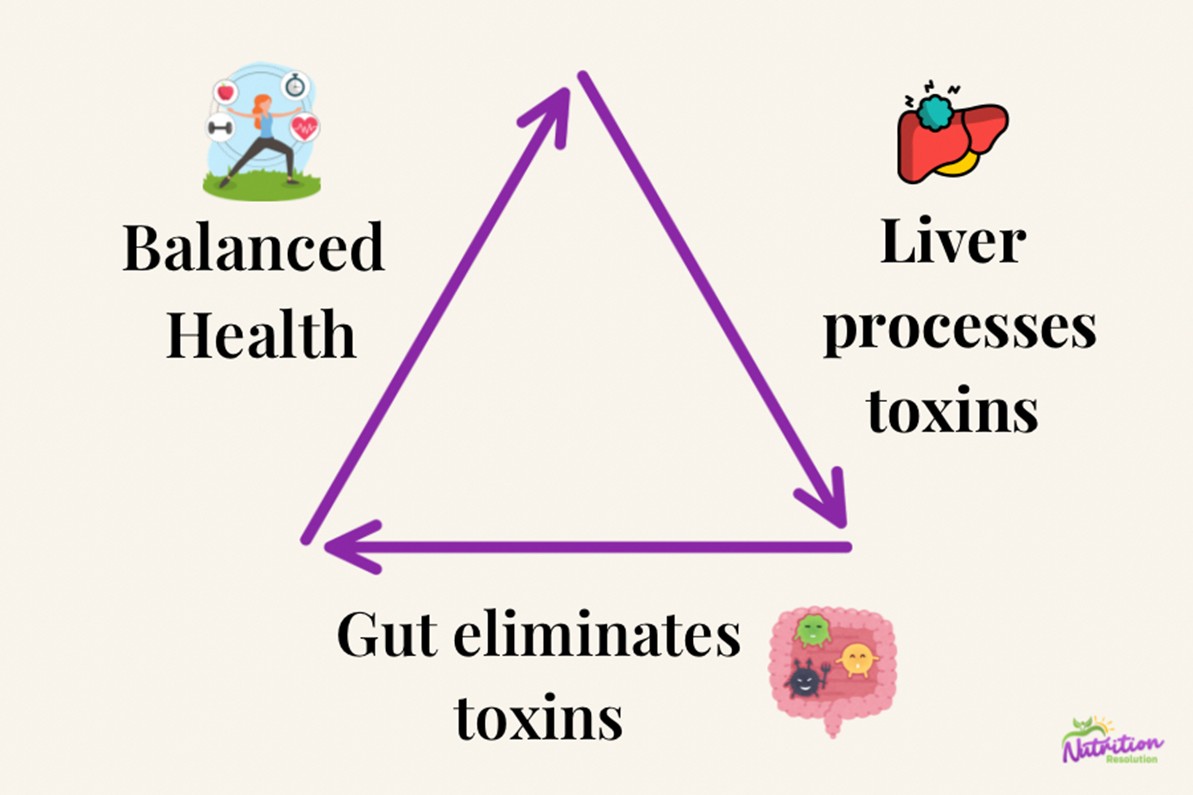
One of the biggest things that gets missed in detox conversations? The fact that your liver and gut are a team, and it’s hard to support one without impacting the other. Your liver filters and processes toxins, but it relies on your gut to package and eliminate them efficiently. If your gut isn’t moving well—whether due to constipation, dysbiosis, or inflammation—those toxins get recirculated, putting even more pressure on your liver. In my practice, I often see skin flare-ups, hormone imbalances, and bloating show up together—usually a sign that both the gut and liver need support.
And here’s something people rarely talk about: when you’re working to rebalance the gut, especially clearing bacterial or yeast overgrowth like SIBO or candida, you’re massively increasing the detox burden on your liver. In fact, in my practice, we don’t even think about starting a gut protocol until someone is pooping regularly, fully eliminating, and has foundational liver support in place. Otherwise, we’re asking for trouble.
This is a big reason why so many people feel like they “can’t tolerate” antibiotics or herbal antimicrobials—they jump in too fast, start at too high a dose, or overlook key basics like bile flow support, Epsom salt baths, proper hydration, and anti-inflammatory nutrients. When the liver and gut aren’t working together smoothly, die-off symptoms spike, and progress can stall or even backfire. That’s why true detoxification isn’t just about the liver doing its job—it’s about making sure the whole pathway (from processing to elimination) is supported every step of the way. Supporting both systems is key not just for gut balance, but also for long-term liver health. This kind of natural detoxification ensures your body can handle everything from daily exposures to bigger gut-rebuilding protocols without overwhelming your system.
Final Thoughts: Support Your Liver the Right Way
Whether you’re dealing with minor symptoms or looking to protect against things like fatty liver or sluggish detox over time, the right approach makes all the difference. Now that you know the real signs your liver might be asking for help—and how closely it’s tied to your gut—you’re probably wondering what to do next. If you’ve been thinking about a detox, this is where I recommend starting (especially over trendy options like a 3-day liver cleanse juice.)
I created my 7-Day Detox Diet Plan to give you a realistic, food-friendly approach that supports both liver and gut health at the same time. It’s filled with simple, nourishing recipes designed to:
- Encourage natural detox pathways (especially bile flow and elimination)
- Calm inflammation
- Provide key nutrients your body needs to process and clear waste efficiently
This plan helps you reset without extremes, so you can start feeling lighter, clearer, and more balanced in just one week.👉 Download your free copy here and take the first step toward smarter detox support.
FAQs: Liver Detox Support & Common Questions
What are the early signs that your liver needs detoxing?
Early signs that your liver needs support include bloating, fatigue, hormonal imbalances, skin issues, and sensitivity to smells or chemicals. In practice, these subtle signs often show up when someone’s detox pathways aren’t functioning optimally.
What are the signs of fatty liver detox working?
My clients often notice subtle improvements like better energy, less bloating, and clearer skin once we start supporting liver function. Keep in mind that true healing takes time, and signs of liver detox working aren’t always dramatic right away.
How long does it take to detox your liver?
There’s no magic timeline for natural detoxification. Supporting your liver is an ongoing process, and in my experience, people often start feeling lighter and notice small improvements within a couple of weeks of consistent support. (If you’ve seen articles about how to detox your liver in 3 days, take those with a grain of salt; quick fixes rarely create lasting change.)
What can I drink to detox my liver?
The best drinks for liver detoxification are simple and natural: plenty of water, herbal teas like dandelion or milk thistle, and nutrient-rich juices. My Detox Juice recipe includes ingredients like dandelion, which supports healthy bile flow, and ginger, which may help soothe digestion and inflammation—both important for your liver’s natural cleansing process.
What are the side effects of a liver detox?
When you first start supporting detox pathways, it’s not uncommon to notice temporary shifts like low energy, breakouts, or changes in digestion. These are usually short-lived and a sign that your body is adjusting—but if symptoms are intense or last more than a few days, it’s a cue to slow down and focus on more gentle, sustainable support.
How do I detox my liver naturally at home?
Supporting your liver at home is all about consistent, gentle care: stay hydrated, eat plenty of colorful vegetables and bitter greens, include herbs traditionally used to support liver function, and avoid excess alcohol and processed foods. My 7-Day Liver Cleanse Diet Plan is a great place to start if you’re looking for easy, practical ways to incorporate these habits.