You’ve already spent thousands of dollars on SIBO care. You’ve paid for breath tests, stool tests, appointments, antibiotics, herbal protocols, probiotics, digestive enzymes, and diets that required you to rebuild your entire life around food. Some things may have helped briefly. Others did nothing. A few may have made you feel worse.
So when someone suggests another test, supplement, or program, your first thought is probably: Why would this be any different?
That is a completely reasonable question.
But after more than a decade of working with tough SIBO cases, I’ve found that the problem is often not that the person hasn’t tried enough. It’s that the things they tried were never connected as part of one complete strategy. They received a test here, a protocol there, and another diet somewhere else, but no one stepped back to look at why the overgrowth developed, whether the approach matched their specific case, what needed to happen first, or how to rebuild afterward.
In this article, I’m going to show you what recent research tells us about why fragmented digestive care becomes so expensive, why even reasonable SIBO treatments can fail or provide only temporary relief when they happen in isolation, and what a more complete, sequenced approach actually looks like. Because you’re right not to spend more money blindly. Before you invest in anything else, you deserve to understand what needs to be different this time.
Does Spending Thousands Without Improvement Mean Nothing Will Work?
No. It means the approaches you have tried did not lead to lasting improvement. It does not mean your body is incapable of getting better or that there is nothing left to look at.
I understand why it starts to feel that way. After your third breath test, fifth supplement protocol, and another diet that leaves you eating fewer foods instead of more, it becomes harder to believe the next approach will be any different. You may have had a few stretches when you felt somewhat better, only to watch everything come back. Eventually, “I have tried so many things” turns into “Nothing is ever going to work for me.”
But those are not necessarily the same thing.
This makes me think of someone we worked with who I’ll call Sarah. By the time she came to us, she had already spent years trying to solve her SIBO. And her story was so similar to what I hear from people who come to our practice all the time. She had pages of supplements she had taken, several rounds of breath testing, multiple elimination diets, and four or five practitioners behind her.
Sarah could walk me through every antibiotic, herbal combination, probiotic, and motility supplement she had tried. She remembered the things she had ordered after reading that they might help, the diets she had committed to, and the brief stretches when she thought something might finally be working.
But when we started laying everything out in order, a completely different picture emerged. No one had ever clearly explained to Sarah why each approach had been chosen, what part of the problem it was meant to address, or how one attempt was supposed to connect to the next.
Sarah had done everything she knew to do. What she had never been given was one complete strategy that identified and addressed every part of her case.
This is one of the most important distinctions I make when someone tells me they have already tried everything. We cannot simply pair a supplement with a symptom and assume we are treating the right problem. Bloating, constipation, diarrhea, abdominal pain, and food reactions can each have several different causes. Different SIBO and IMO patterns can require different approaches. A supplement that makes sense for one person’s bloating may be completely wrong for another person with what appears to be the exact same symptom.
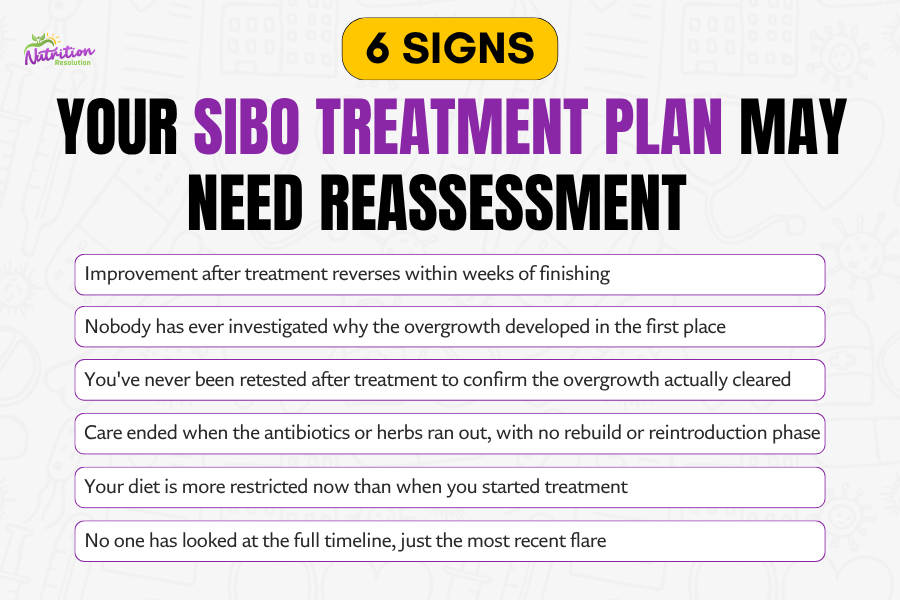
So I want to know much more than whether someone was given a reasonable supplement or medication. Was it targeting the right problem? Did it happen in the right order? Was anything done to prepare the digestive system beforehand? Did anyone investigate why the SIBO developed, or create a plan for rebuilding the gut and reducing the risk of another recurrence afterward?
These are not unusual gaps. They are some of the things we see most often when people come to Nutrition Resolution after years of trying to solve their digestive symptoms.
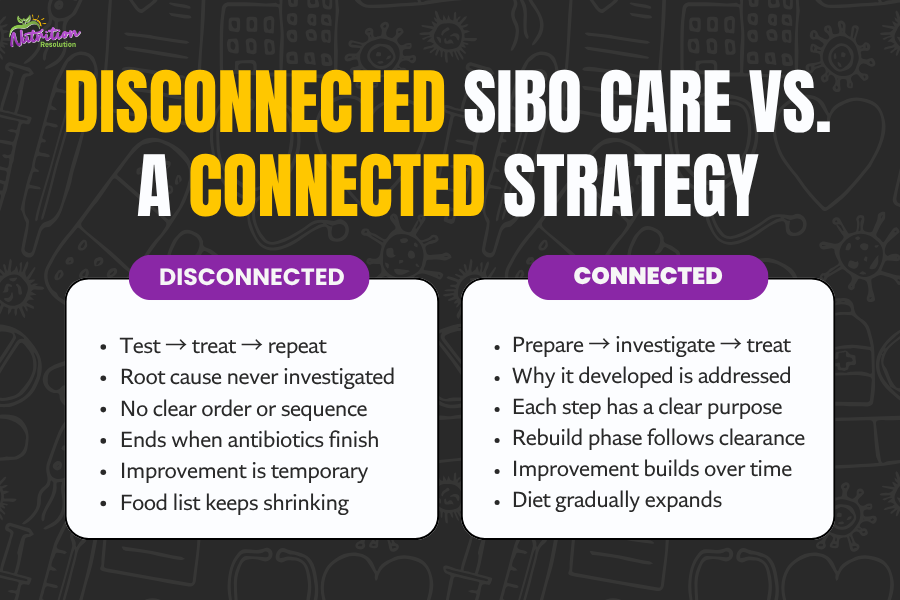
Part of the problem is the way digestive care is often structured. Conventional gastroenterology plays an essential role in ruling out serious disease and providing medication or procedures when they are needed. But once overt disease has been ruled out, many people are left with an IBS diagnosis and a collection of ways to manage individual symptoms. One thing for constipation, another for reflux, a restrictive diet for bloating, and perhaps an antibiotic when a breath test comes back positive. Each piece may have a legitimate purpose, but no one is necessarily stepping back to ask how the whole picture fits together.
We see the same fragmentation in functional care. Someone may be given an extensive supplement protocol, but that does not automatically make it a comprehensive plan. More testing, more supplements, and more aggressive treatment are not necessarily better if the underlying reasoning and sequence are still missing.
Sometimes a person was given an appropriate treatment, but at the wrong point in the process. Sometimes the treatment was aimed at an overgrowth that was never fully characterized. Sometimes it reduced the overgrowth temporarily, but the reason it developed was still sitting there untouched. And very often, the plan ended as soon as the antibiotics or herbs were finished, even though the person was still reacting to food and living with a digestive system that felt incredibly fragile.
None of that means the person failed. It also does not automatically mean every practitioner or treatment they tried was bad. It means the care may have addressed one piece of a much larger picture.
Your treatment history still matters, and not everything you have already spent, tried, or learned was a waste. What helped, what made you worse, how long the improvement lasted, and what happened next can all give us valuable clues about what has been missed. This is not about throwing everything out, repeating every test, and starting from zero. It is about putting those experiences into context so we can understand why the improvement never lasted and make more informed decisions about what should happen next.
Why Does Unsuccessful IBS and SIBO Care Become So Expensive?
The costs keep adding up when symptoms aren’t getting better, and care becomes a cycle of more appointments, more testing, and one more treatment after another.
A 2026 systematic review pulled together 33 studies from 14 countries looking at the cost of IBS. Two of the US studies specifically compared costs based on whether treatment worked or symptoms were adequately controlled. When treatment failed or symptoms remained poorly controlled, annual healthcare costs were $4,130 to $6,264 higher per patient.
And when you think about it, that makes perfect sense. When a treatment doesn’t work, the spending doesn’t stop. You move on to the next appointment, the next test, the next practitioner, or the next protocol. Maybe something helps for a few weeks, but then the symptoms come back and you start looking again. One failed attempt becomes two, then five, and eventually you’re sitting there wondering how you’ve spent thousands of dollars without ever having a plan that actually got you somewhere.
That doesn’t mean every person with unresolved IBS will spend that exact amount. These studies looked at different groups of people, different healthcare systems, and different types of costs. But the pattern is clear: when symptoms stay uncontrolled and treatments keep failing, the costs keep growing.
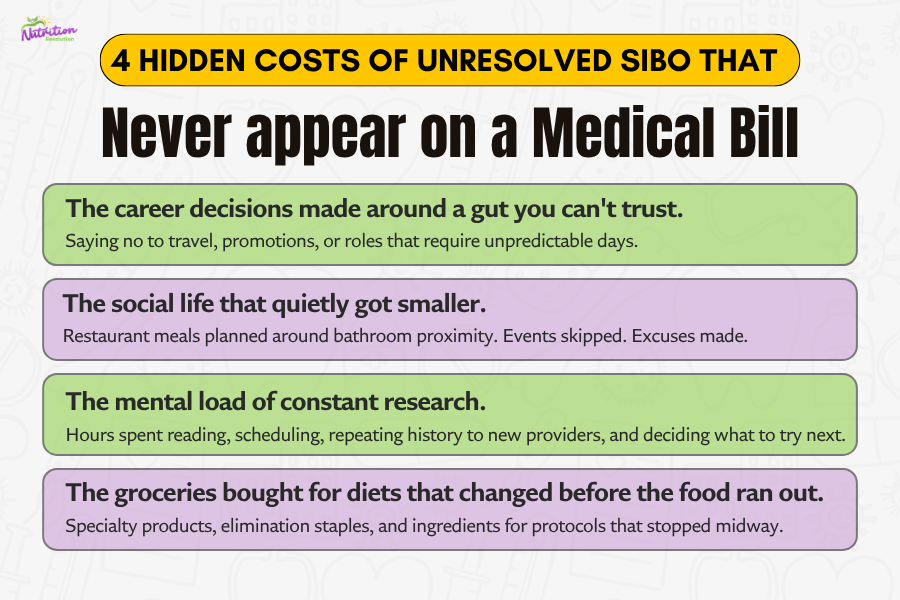
And it’s not just what you’ve paid for appointments, tests, medications, and supplements. The research also looked at missed work, reduced productivity, disability, and other costs that don’t usually make it onto the spreadsheet. In some of the studies, those indirect costs were actually greater than the healthcare expenses.
You know how that can play out in real life. It’s the workday you lose because you were awake half the night with symptoms. It’s the promotion you don’t pursue because you can’t trust your digestion during meetings or travel. It’s the groceries you buy for another new diet and then stop eating when the plan changes again. And it’s all the time you spend researching, scheduling appointments, repeating your history, completing tests, and trying to figure out what to do next.
The authors also pointed to fragmented care, delays in getting the right diagnosis, repeated specialist visits, and redundant testing as possible contributors to preventable costs. Their recommendations were essentially the opposite: more structured follow-up, better coordination between providers, and a more holistic approach instead of waiting for symptoms to flare and reacting all over again.
And that really gets to the heart of why treatment failure becomes so expensive. It’s usually not one enormous financial decision. It’s four or five years of individual decisions that each seemed completely reasonable at the time: one more test, one more supplement combination, one more restrictive diet, and one more practitioner looking at another isolated piece.
The attempts keep piling up, but no one has created a clear strategy for how all those pieces are supposed to work together.
Why Do SIBO Treatments Keep Failing or Only Work Temporarily?
Because doing a lot of treatments is not the same thing as having one complete, sequenced strategy.
A positive breath test followed by antibiotics isn’t necessarily wrong. The problem is when that becomes the entire plan. No one looks at why the overgrowth developed, whether your digestive system is ready for treatment, or what needs to happen afterward so you don’t end up right back where you started.
Then, when the symptoms come back, it’s natural to assume the original treatment simply wasn’t effective. So you try something different, often an herbal protocol that sounds stronger or more comprehensive. But symptoms returning can mean several different things. The treatment may not have fully addressed the overgrowth, the dose or duration may not have been enough, the underlying reason it developed may still be there, or the symptoms may not all be coming from SIBO in the first place. I explain why SIBO comes back after rifaximin in much more detail in a separate article. Rifaximin is in the title because it’s one of the most common SIBO treatments, but the same basic reasons can apply when symptoms return after herbal antimicrobials too.
But switching from antibiotics to herbs doesn’t automatically mean the next approach is any more individualized. Someone tests positive for SIBO and is handed a generic herbal protocol without much consideration for the type of overgrowth they have or what else is happening in their digestive system. Hydrogen, methane, and hydrogen sulfide are produced by different groups of microorganisms. And in our clinical experience, they don’t necessarily respond to the same herbal approach.
Dysbiocide combined with FC Cidal is a good example. I see this protocol used for all three types of SIBO, often because it’s described as the herbal combination that research found to be as effective as rifaximin. But the study people are referring to pooled that protocol together with a completely different herbal combination, didn’t tell us which approach worked for which gas pattern, and was completed before hydrogen sulfide breath testing was available.
So the research doesn’t show that Dysbiocide and FC Cidal are the right choice for every person with SIBO. Yet the protocol is often handed out as though a positive SIBO test is all we need to know. It isn’t.
And choosing the right treatment is only one part of it. Even the right treatment can fail or provide only temporary relief if it’s used at the wrong point in the process or without the steps that need to happen before and after.
It’s a little like trying to renovate a damaged house by grabbing the biggest hammer and swinging. The hammer may be exactly the tool you need for one part of the job. But first, someone has to inspect the damage, stabilize the structure, and determine where that hammer should actually be used. And after the demolition is finished, someone still has to rebuild.
This is one of the first distinctions I look at when someone comes to Nutrition Resolution saying they’ve already tried everything. I’m not just counting how many treatments they completed. I want to know what each one was targeting, whether it matched their type of overgrowth, whether they reached a therapeutic dose, how long they stayed on it, and whether multiple courses that were meant to be consecutive were actually completed that way or separated by long gaps.
I also want to know what happened during each treatment, how long any improvement lasted, whether anything was done about the underlying causes, and whether there was ever a real repair, rebuilding, and food-reintroduction phase afterward.
When we map it all out, what looked like one long treatment history often turns out to be a collection of separate attempts. Some of them may have been completely reasonable. But they weren’t connected, sequenced, or adjusted as part of one larger strategy.
And that’s often what’s been missing. Not necessarily one more treatment, but someone looking at the whole picture and putting the right pieces in the right order.
Does the Order of SIBO Care Really Matter?
Yes. Even the right treatment can fail, feel intolerable, or provide only temporary relief when it happens at the wrong point in the process.
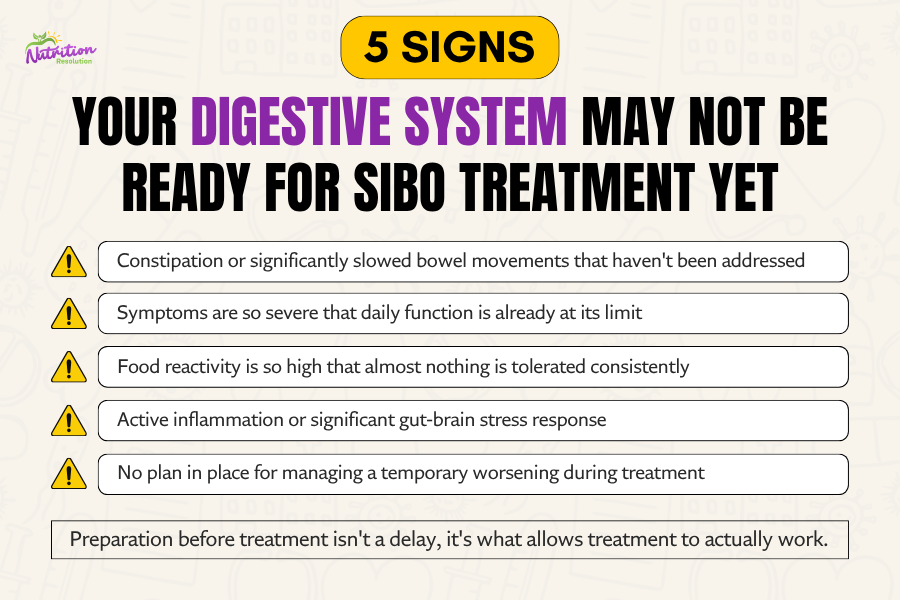
To stay with the house analogy, you can’t rebuild a house that’s still on fire. If someone is already highly symptomatic, inflamed, constipated, or barely tolerating food, immediately starting an aggressive antimicrobial protocol may be more than their system can handle.
I worked with one woman who had started treatment while her system was completely backed up. Within a few days, she felt awful. She was foggy, heavy, and had that flu-like feeling that makes you think something has gone very wrong. She stopped the treatment and came away believing that her body simply couldn’t tolerate it.
But the problem wasn’t necessarily the treatment. Nothing had been done to calm her symptoms, get her bowels moving, or prepare her system first. Once we took care of those pieces, she was able to return to the same treatment and have a completely different experience.
The order matters on the other side of treatment too. SIBO commonly returns after apparently successful antibiotic treatment. And if the overgrowth is reduced but no one addresses why it developed, the improvement may not last. If years of restriction and repeated treatment have left the gut fragile, simply finishing the antimicrobial phase may still leave someone reacting to foods and afraid to eat.
And if no one ever helps them reintroduce foods, they may technically complete treatment without getting back the parts of their life that SIBO took away. They’re still traveling with their own food, avoiding restaurants, and living on the same short list of safe meals.
That’s why SIBO care can’t begin and end with killing the overgrowth. There are steps that need to happen before, during, and after that phase, and skipping any one of them can change the outcome.
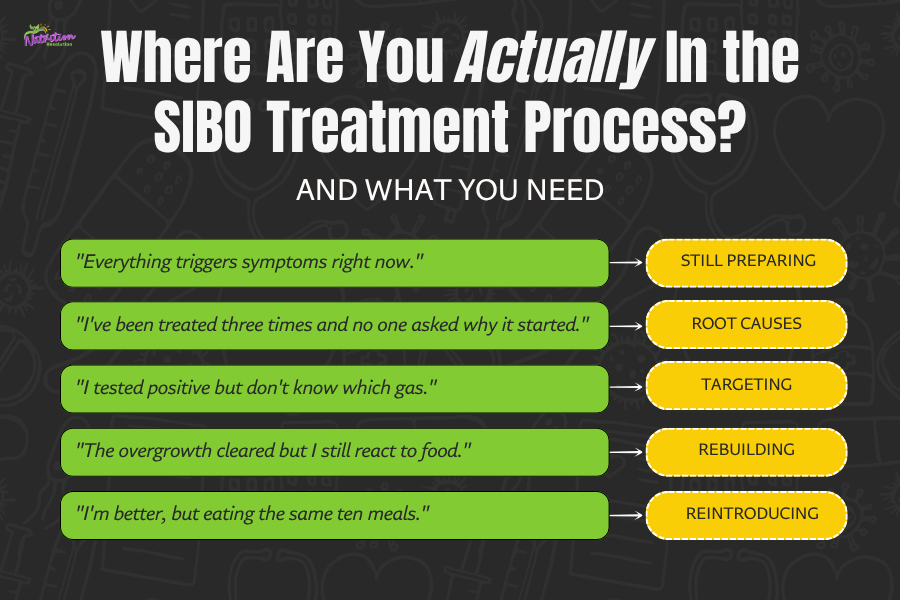
In our approach, those steps are organized into five stages, each one creating the foundation for the next.
Why Is Your Gut Still Not Better?
In my master class, I explain why the usual piecemeal approach so often provides temporary relief without lasting improvement, and walk you through the five stages it actually takes to rebuild your gut in the right order.
What Are the Five Stages of a More Complete SIBO Strategy?
A more complete SIBO strategy prepares the digestive system, identifies why the problem developed, targets what’s actually driving the symptoms, rebuilds afterward, and helps the person return to a broader diet.
These aren’t five completely separate boxes we check one at a time. There can be overlap, and exactly how we move through them depends on what each person needs. But each stage has a specific job and creates the foundation for what comes next.
What Happens During Stage 1: Calm and Prime the System
During this stage, we work to reduce excess fermentation, calm inflammation and the gut-brain stress response, address constipation or impaired movement when it’s present, and bring symptoms down to a more manageable level so the person feels stable enough to move into the antimicrobial phase.
Diet may be used here to bring symptoms down to a more manageable level, so the person isn’t already at their limit if symptoms temporarily increase during the antimicrobial phase. But it’s a short-term tool, not the entire plan and not a permanent way of eating. We’re preparing the digestive system for the deeper work instead of asking an already overwhelmed body to absorb another aggressive change.
What Happens During Stage 2: Identify Root Causes
During this stage, we identify what allowed bacterial overgrowth to develop in the first place and what may keep allowing it to return.
This is separate from whether we can reduce the specific microbes with the right targeted antimicrobial approach. We’re looking at the gut environment that allowed the overgrowth to develop. That may involve impaired motility related to food poisoning, constipation, certain health conditions, or medications; reduced stomach acid, bile flow, or digestive enzymes; structural changes after surgery; microbiome disruption; chronic stress; or several of these factors working together.
This is why the full timeline matters. Sometimes the most important clue is something that happened years before the current symptoms began.
What Happens During Stage 3: Clear the Overgrowth
During this stage, we address the specific overgrowth that’s driving the symptoms.
And I want you to notice that clearing the overgrowth is Stage 3, not Stage 1. Most SIBO protocols jump straight to antibiotics or herbal antimicrobials, but we first make sure the digestive system has been properly primed. The root-cause assessment may happen before this stage or overlap with it, depending on the person.
That means choosing an approach that targets the person’s specific type of SIBO, gradually bringing it up to a therapeutic dose in a way their system can handle, and helping them manage symptoms that come up so they can maintain the approach for the intended duration.
We also pay close attention to how you’re responding along the way. Many people need more than one antimicrobial course. In our clinical experience, higher gas levels on the breath test typically indicate that additional courses may be needed, although the response along the way ultimately determines what happens next. We make sure those courses happen close enough together to keep making progress, then retest when appropriate so we don’t stop before the overgrowth has actually been fully cleared.
What Happens During Stage 4: Repair and Rebuild
During this stage, we support the intestinal lining, digestive environment, and beneficial bacteria that may have been affected by years of symptoms, restriction, and repeated antibiotics or antimicrobials.
In our practice, we use a comprehensive microbiome stool analysis to personalize this rebuilding phase. It gives us a broader view of the colonic microbiome, including overall microbial diversity, which beneficial groups appear depleted, where opportunistic bacteria may be overrepresented, and how the organisms present may be functioning in ways that support or undermine the health of the gut lining. We interpret those findings alongside the person’s symptoms, history, and other testing to make more informed decisions about probiotics and the support their gut may need.
This can be a fragile stage, so rebuilding often needs to happen gradually. Clearing an overgrowth doesn’t automatically restore the intestinal lining, digestive environment, and microbial balance needed for the gut to handle a broader range of foods. Stage 4 is about rebuilding that capacity. Once the gut is stronger and less reactive, we can begin the more active process of bringing foods back in.
What Happens During Stage 5: Reintroduce and Expand
During this stage, we gradually bring foods back in and help the person understand what they can actually tolerate now.
A food that triggered symptoms when SIBO was active may not need to remain forbidden forever. This stage is where the plan starts translating back into real life: eating a broader diet, going to restaurants, traveling, socializing, and making food decisions without the same level of fear.
This was another piece Sarah had never been guided through. Even during periods when her symptoms improved, she was still eating the same small group of safe foods. And for her, as with so many people with SIBO, being able to eat more foods was one of the biggest reasons she wanted help in the first place. If the process ended before she could expand her diet, then she hadn’t actually reached the outcome she was working toward. Once rebuilding and systematic food reintroduction became part of the plan, she began bringing back foods she had started to believe would be off-limits forever.
Have You Tried Everything, but Never Had One Complete Strategy?
This is what we help people work through every day at Nutrition Resolution. We look at the full history, identify what may have been missed, and guide you through the entire process in the right order, rather than handing you one more disconnected thing to try.
How Can You Avoid Spending More Money on Another Disconnected Attempt?
Before purchasing another test, supplement, or protocol, make sure someone can explain what it’s intended to accomplish, why it belongs at this point in your plan, and what will happen next.
You don’t necessarily need someone to predict every step from the beginning. But you should understand the reasoning behind the step directly in front of you and how it fits into a larger strategy. If the answer is simply, “Let’s try this and see what happens,” without any explanation of why this particular approach makes sense for you, you may be walking into another disconnected attempt.
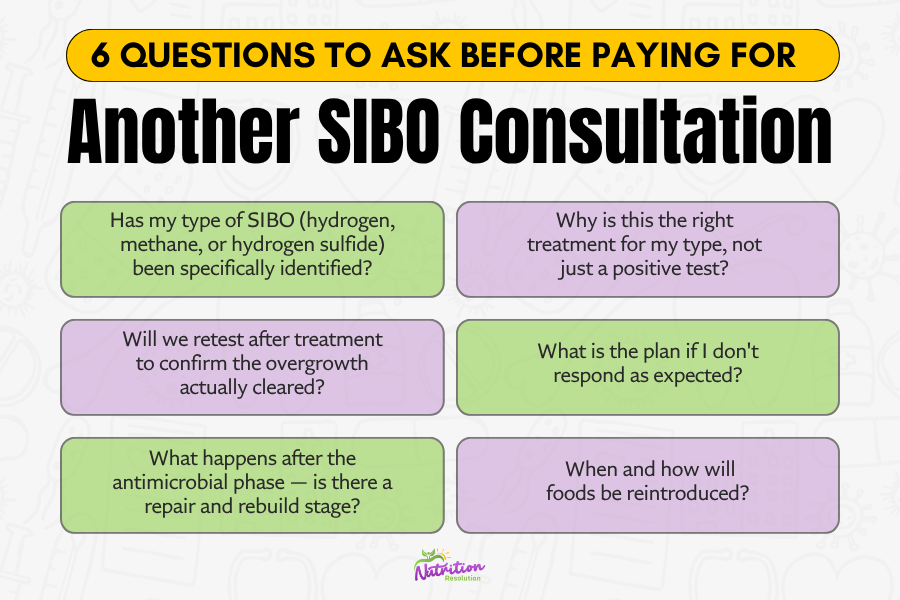
Before investing in the next step, ask:
- What evidence suggests this is the right target?
- What may have allowed this problem to develop in the first place?
- Is my digestive system ready for this step?
- How will we know whether it’s working?
- What will change if I don’t respond as expected?
- What happens after this stage?
- How and when will foods be reintroduced?
- What is being done to reduce the likelihood of recurrence?
You should be able to see how the pieces connect. Your testing should influence what you target. Your symptoms and history should affect how you prepare. Your response should determine whether the plan needs to be adjusted, continued, or retested. And clearing the overgrowth should lead into rebuilding and food reintroduction, not mark the end of care.
A strategic plan doesn’t necessarily mean doing more. Sometimes it means stopping supplements that aren’t serving a clear purpose, avoiding another test that won’t change the plan, or recognizing that the next step isn’t another antimicrobial at all. What matters is that each step has a clear purpose and moves you toward something larger than another temporary improvement.
This is also why, at Nutrition Resolution, we can tell you what it will cost to get started, but we can’t tell you exactly what your entire course of care will cost before we begin. We don’t know yet whether you’ll need three months, six months, eight months, or longer, or exactly which supplements you’ll need along the way. Those decisions depend on what your testing shows, how your body responds, and what we learn at each stage. Your plan should evolve as we get new information, but every change should have a clear reason behind it.
What Should You Do Before Spending More Money on SIBO Care?
Stop looking for the next product and start looking for a clear explanation of what has been missing from the process you’ve already followed.
If you’re hesitant to spend more money after investing in tests, supplements, appointments, or protocols that didn’t get you where you wanted to go, that hesitation is completely reasonable. I don’t think you should blindly say yes to the next person who promises they have the answer.
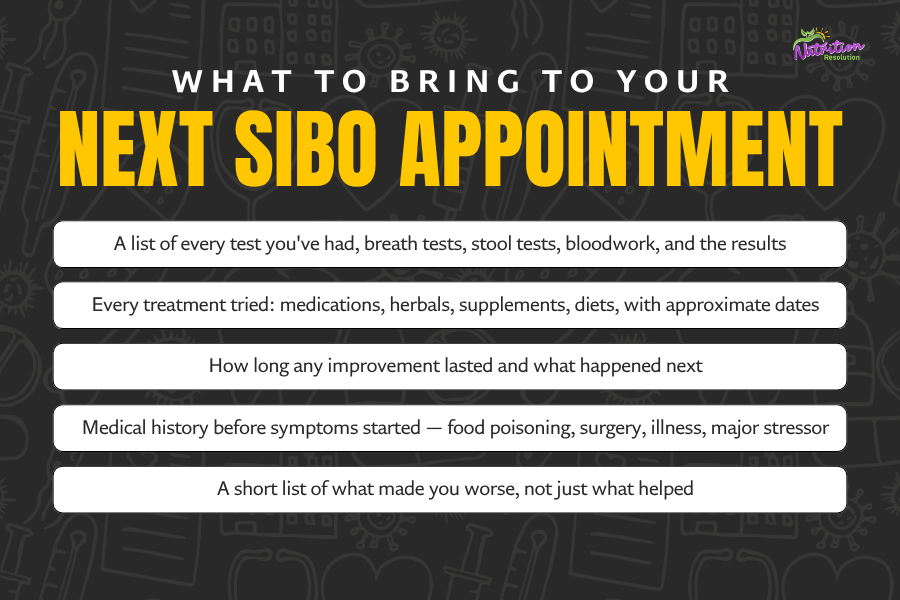
Before you make another decision, gather your previous test results and create a timeline of what you’ve tried. Include the specific medications, supplements, and diets you used, how much you took, how long you stayed with each approach, what happened while you were doing it, and how long any improvement lasted. If you’ve been dealing with this for years or even decades and don’t have every detail, don’t worry. This isn’t about creating a perfect record. It’s about gathering as much relevant information as you can so you can begin to see the larger pattern more clearly. That history may tell us as much as another new test.
The question isn’t whether you’re willing to try harder. Most people who reach us have already tried incredibly hard. The question is whether the next plan is meaningfully different from the disconnected attempts you’ve already made. Is someone looking at the entire history, identifying what may have been missed, and putting the next steps in an order that makes sense?
Spending money unsuccessfully in the past doesn’t mean every future investment will lead to the same outcome. But before you say yes to anything else, make sure you’re investing in an actual strategy, not simply another product or protocol.
This is what we do every day at Nutrition Resolution. We built this framework through more than a decade of working with tough SIBO cases, many involving people who had already spent years cycling through disconnected attempts. We look at the full history, map out what you’ve already tried and how you responded, and identify what may have been missed. Then we guide you through the full process, from preparing your digestive system and addressing the overgrowth to rebuilding your gut and expanding your diet afterward, adjusting the plan as we learn more along the way.
The first step is to complete a short application. If it looks like we may be a good fit, we’ll invite you to schedule a complimentary strategy call so we can learn more about what you’ve already tried, explain how our process works, and answer your questions. There is no obligation to enroll.