


Most people don’t think much about how they digest fat until something goes wrong.
When digestive symptoms show up, it’s common to blame dairy, gluten, FODMAPs, or food sensitivities. Even in the digestive health world, fat malabsorption isn’t always one of the first things people think about. But in my experience, it deserves far more attention than it gets.
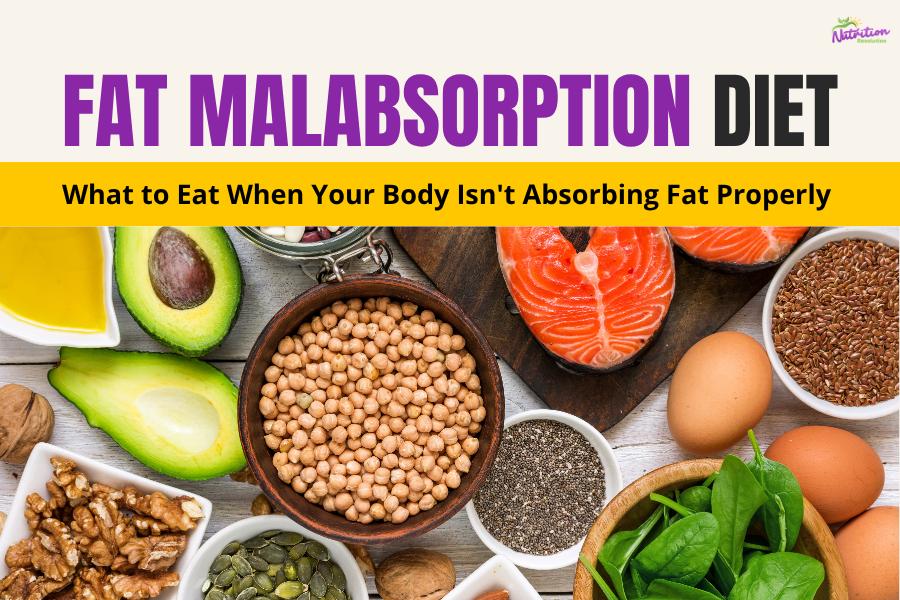
I see it all the time in practice. Someone comes in frustrated after trying multiple diets, yet they continue to have diarrhea, greasy stools, bloating, weight loss, or vitamin deficiencies. They’re often eating what most people would consider a healthy diet, full of foods like salmon, avocado, olive oil, nuts, and seeds. Or they may simply be eating a typical Western diet that includes restaurant meals, convenience foods, and larger amounts of fat than their digestive system can comfortably handle.
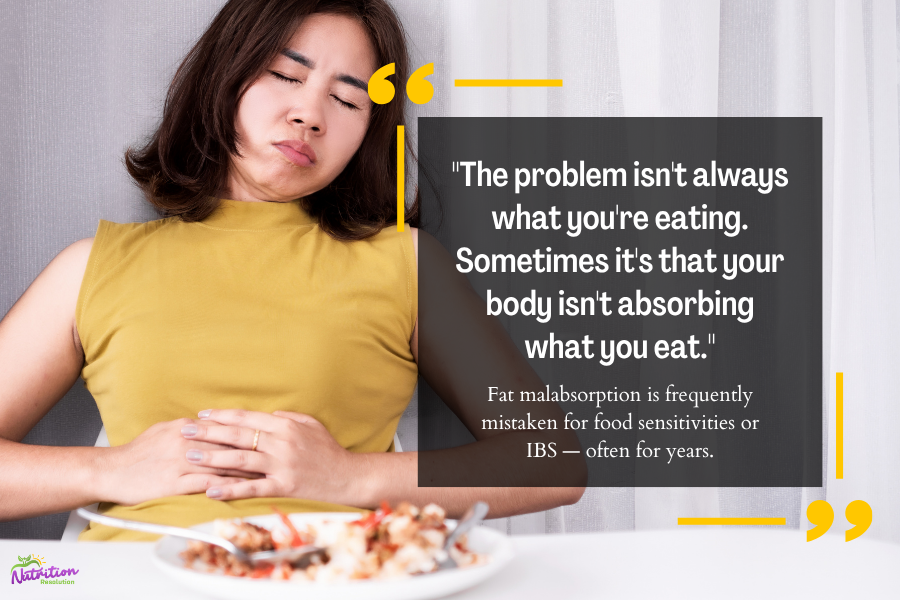
The problem isn’t necessarily the foods they’re eating. The problem is that their body isn’t absorbing fat properly.
That’s where a carefully structured diet for fat malabsorption can make a tremendous difference.
By adjusting how much fat you eat, distributing it throughout the day, and choosing foods that place less demand on your digestive system, many people experience meaningful improvements in their symptoms. But diet is only part of the picture. Equally important is identifying why fat isn’t being absorbed in the first place so the underlying problem can be addressed.
In this guide, we’re going to talk about what fat malabsorption is, the most common fat malabsorption causes, how changing the amount and distribution of fat in your diet may help, what to eat on a low fat diet, and why diet alone isn’t always enough.
What Is Fat Malabsorption?
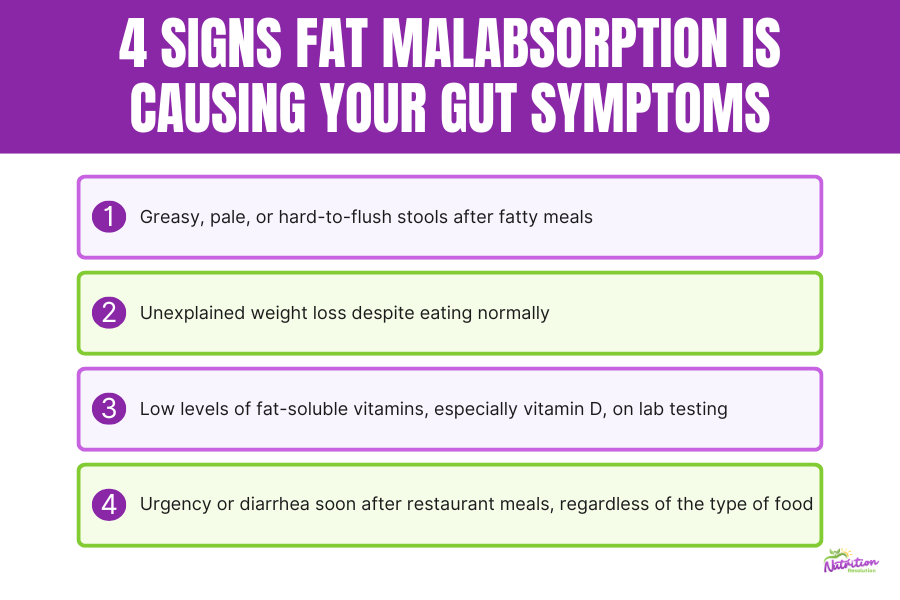
Fat malabsorption simply means your body isn’t absorbing all of the fat you eat. Instead of being broken down, absorbed through the small intestine, and used for energy, some of that fat passes through your digestive tract and ends up in your stool.
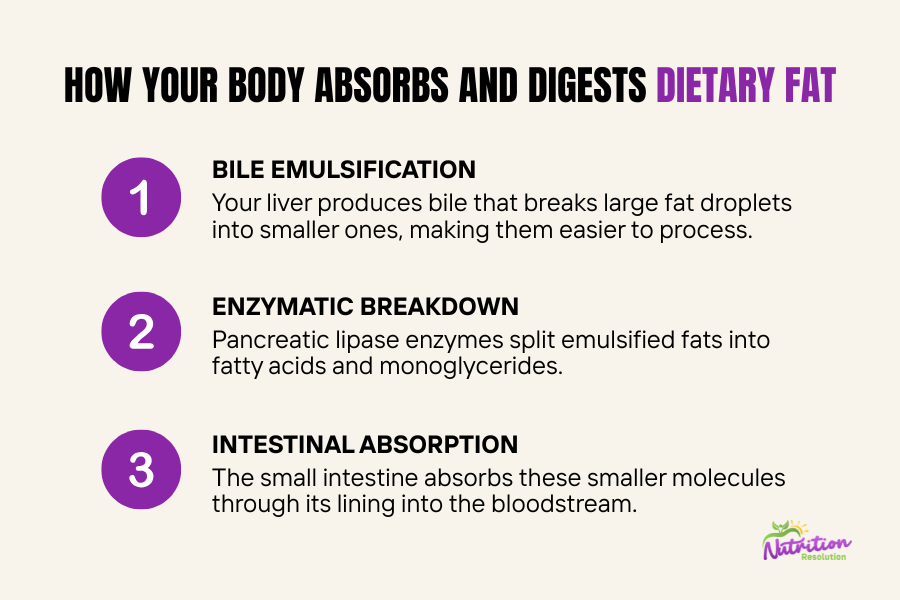
Under normal circumstances, digesting fat is a carefully coordinated process. Your liver produces bile, which works much like dish soap or detergent. If you’ve ever tried washing a greasy pan with only water, you know the oil simply floats on top. Add a little dish soap, though, and that large layer of grease breaks apart into tiny droplets that are much easier to wash away. Bile does something very similar in your digestive tract, breaking large fat droplets into much smaller ones so digestive enzymes, primarily lipase from the pancreas, can finish breaking them down into fatty acids and other components small enough to be absorbed by the small intestine.
When something interferes with that process, fat isn’t absorbed efficiently. Instead, some of it continues through the digestive tract and leaves the body in the stool.
One of the hallmark signs of fat malabsorption is a type of stool called steatorrhea. Rather than looking like a typical bowel movement, stools may become pale, bulky, greasy, foul-smelling, or difficult to flush. Not everyone experiences every one of these symptoms, and in some cases the changes are subtle enough that people don’t recognize them.
In our practice, we also see fat malabsorption identified on comprehensive stool testing. It’s not uncommon for someone to come to us after months or even years of chronic diarrhea, bloating, weight loss, or unexplained vitamin deficiencies, having been told that all of their standard testing was “normal.” Then, on a more comprehensive evaluation of digestive function, we find elevated fat in the stool, an important clue that fat isn’t being absorbed the way it should be.
Over time, fat malabsorption affects more than just digestion. Because the fat-soluble vitamins A, D, E, and K all require fat for absorption, deficiencies can develop even when someone is eating a nutritious diet. People may also experience unintended weight loss because they’re quite literally losing calories before their body has a chance to absorb and use them.
One of the biggest misconceptions we see is that fat malabsorption itself is the diagnosis. In reality, it’s a sign that something higher up in the digestive process isn’t working as it should. Once we know fat isn’t being absorbed properly, the next question becomes: what’s causing it?
What Causes Fat Malabsorption?
Fat malabsorption isn’t a medical condition by itself. It’s the result of something interfering with your body’s ability to digest or absorb fat properly. There are several possible causes of malabsorption in adults, depending on which part of the digestive process is affected.
One important cause is exocrine pancreatic insufficiency (EPI). In this condition, the pancreas doesn’t produce enough digestive enzymes, particularly lipase, to fully break down dietary fat. EPI can occur with chronic or recurrent pancreatitis, pancreatic cancer, cystic fibrosis, pancreatic or upper gastrointestinal surgery, longstanding diabetes, and certain intestinal conditions such as celiac or Crohn’s disease. Without enough enzymes, fat can’t be absorbed efficiently and instead passes through the digestive tract. If you’d like to learn more, we’ve written a complete guide to the pancreatic insufficiency diet here.
Another important cause is decreased bile production or impaired bile delivery. Remember the detergent analogy from earlier? Bile acts like a natural detergent, breaking large fat droplets into much smaller ones so digestive enzymes can finish the job. If too little bile reaches the small intestine, fat digestion becomes much less efficient, making it difficult to absorb dietary fat.
This can happen for several reasons. In some people, bile flow is reduced because of cholestatic liver disease, gallstones that obstruct bile flow, or other disorders affecting the bile ducts. Regardless of the cause, if not enough bile reaches the small intestine, fat digestion becomes less efficient because there isn’t enough “detergent” available to properly prepare fat for digestion.
It’s worth pointing out that this is different from bile acid malabsorption (also called bile acid diarrhea). Although the names sound very similar, they’re actually describing different problems. With fat malabsorption caused by reduced bile availability, there isn’t enough functional bile reaching the small intestine to properly digest fat. In bile acid malabsorption, digestion initially occurs as expected. The problem develops later, when bile acids aren’t properly reabsorbed farther down the digestive tract. Instead, excess bile acids spill into the colon, where they stimulate water secretion and intestinal movement, leading to chronic diarrhea rather than fat malabsorption.
Another condition we commonly think about in our practice is small intestinal bacterial overgrowth (SIBO). One way SIBO can contribute to fat malabsorption is through bile acid deconjugation, where excess bacteria alter bile acids and reduce their ability to support normal fat digestion and absorption.
Conditions that damage the lining of the small intestine can also interfere with fat absorption. Celiac disease and inflammatory bowel disease, particularly Crohn’s disease involving the small intestine, can reduce the intestine’s ability to absorb nutrients, including fat. Even if digestion is working normally, the intestine may simply not be able to absorb what has already been broken down.
Finally, fat malabsorption can develop after certain gastrointestinal surgeries or in people with short bowel syndrome, where there is simply less functional intestine available to digest and absorb nutrients.
One thing we’ve learned after working with many people struggling with chronic digestive symptoms is that identifying fat malabsorption is only the beginning. The real goal is figuring out why it’s happening, because while the diet we’ll discuss next can often reduce symptoms significantly, lasting improvement depends on identifying and treating the underlying cause.
Does Diet Actually Help Fat Malabsorption?
The short answer is yes, but it’s important to understand what diet can – and can’t – do.
One client comes to mind who had a Friday night tradition with her family. Every week, they’d order pizza, settle in to watch a movie together, and before the movie was halfway over she had already gotten up two or three times to run to the bathroom. The only other time she noticed the same thing was after Sunday brunch with friends. More than once, she found herself white-knuckling the steering wheel on the drive home, wondering if she was going to have to pull over before she made it to her house.
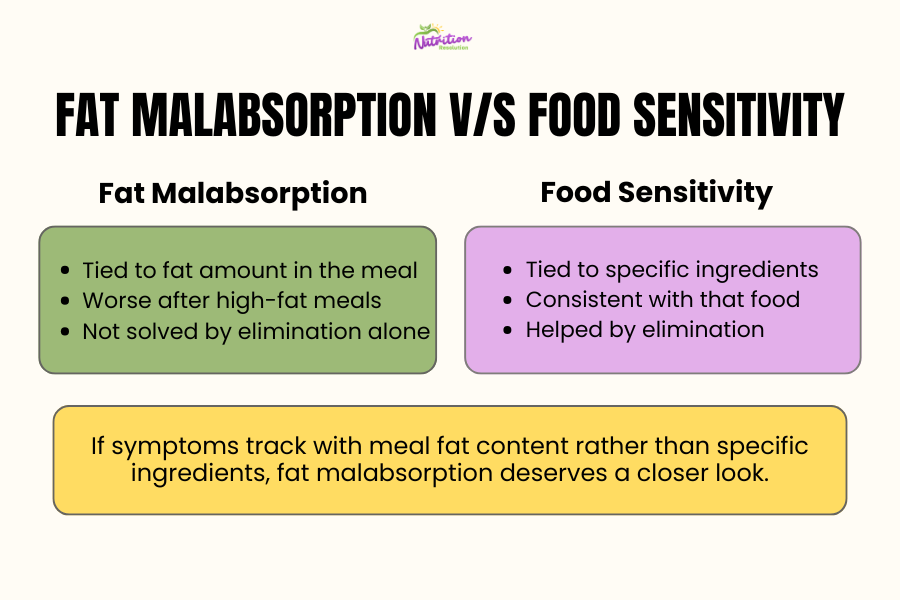
Like many people, she initially assumed she had developed a long list of food sensitivities. She even had food sensitivity testing done and eliminated many of the foods that came back on the report. Despite all those changes, nothing really improved.
As we worked together, we had her carefully track both her meals and her symptoms. That’s when the pattern finally became obvious. It wasn’t the specific foods triggering her symptoms at all. It was the amount of fat in the meal. The foods she prepared at home were naturally much lower in fat than the restaurant meals she ate on Friday nights and at brunch. Once we looked beyond the ingredients themselves and started looking at the overall fat content, everything suddenly made sense.
That’s something we see quite often in our practice.
Diet can be one part of fat malabsorption treatment and management, but it doesn’t correct the underlying reason someone is experiencing it. Depending on the cause and severity of the malabsorption, reducing the amount of fat eaten at one time may make a tremendous difference in how someone feels.
For most people with fat malabsorption, the goal isn’t to eliminate fat altogether. Dietary fat provides energy and essential fatty acids, supports healthy cell membranes, and helps the body absorb vitamins A, D, E, and K. In most cases, fat malabsorption doesn’t mean your body can’t absorb fat at all. It simply means your capacity to absorb fat has been reduced.
That’s where diet becomes such a valuable tool. The goal isn’t to remove fat forever. It’s to identify an amount of fat your digestive system can comfortably handle while you work with your healthcare provider to identify and treat the underlying cause of the problem.
Download Our Free Fat Malabsorption Diet Guide
If you’re experiencing symptoms of fat malabsorption, you don’t have to guess what to eat. Our free Fat Malabsorption Diet Guide includes a complete food list, a low fat diet menu plan for seven days, recipes, and a grocery list designed to help reduce the digestive workload while you work on addressing the underlying cause. It’s a practical place to start so you can begin feeling better today.
Fat Malabsorption Diet: Low Fat Foods to Eat
The goal of a fat malabsorption diet isn’t to eliminate fat altogether. Instead, the focus is on choosing foods that are naturally lower in fat while keeping added fats moderate. Unlike some digestive conditions, there isn’t one specific number of fat grams that’s right for everyone with fat malabsorption. The amount each person can comfortably tolerate depends on both the underlying cause and the severity of their symptoms.
Rather than following a rigid fat limit, most people do best by building meals around naturally lower-fat foods and adjusting the amount of added fats based on how their body responds. As symptoms improve and the underlying cause is addressed, many people are able to gradually expand both the variety of foods they eat and the amount of fat they tolerate.
Lean Proteins
Lean proteins should form the foundation of most meals because they provide plenty of nutrition without adding a large fat burden. Good options include skinless chicken breast, turkey breast, white fish such as cod, haddock, or tilapia, shrimp, canned tuna packed in water, low-fat Greek yogurt, egg whites, and tofu.
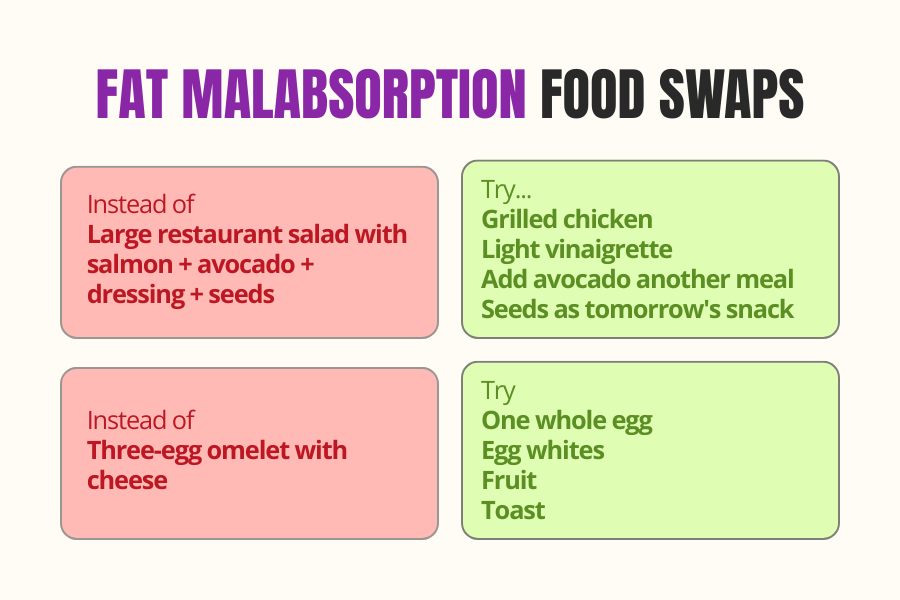
Whole eggs can absolutely fit into this diet as well. Many people simply tolerate one whole egg better than larger, higher-fat egg dishes like a three-egg omelet.
Grains and Starches
Grains and starches are often well tolerated and provide an important source of calories without adding much fat. Rice, oatmeal, potatoes, sweet potatoes, pasta, rice noodles, whole grain bread, sourdough bread, corn tortillas, and other whole grains can all fit well into a fat malabsorption diet.
Vegetables
Most vegetables can be included, although cooked vegetables may be easier for some people to tolerate than raw vegetables, especially when diarrhea or other digestive symptoms are active. Steaming, roasting, or sautéing vegetables until tender can be a good place to start. Carrots, zucchini, green beans, mushrooms, spinach, bell peppers, squash, and pumpkin are all excellent choices.
Fruits
Most fruits are naturally low in fat and can fit well into this style of eating. Bananas, berries, melons, peaches, pears, apples, mangoes, oranges, grapes, and applesauce are all nutritious options, although portions may need to be adjusted based on individual tolerance.
Healthy Fats
Having fat malabsorption doesn’t mean you should avoid fat entirely. Dietary fat provides energy and essential fatty acids, supports healthy cell membranes, and helps the body absorb vitamins A, D, E, and K. The key is choosing modest portions that stay within your current tolerance.
Small amounts of foods like olive oil, avocado, nuts, seeds, and natural nut butters can often be included, but the amount each person tolerates varies. Some people do well with a teaspoon of olive oil or a quarter of an avocado, while others may need to start with even smaller portions until symptoms improve.
Foods to Limit with Fat Malabsorption
The foods most likely to trigger symptoms are those that contain large amounts of fat in a relatively small serving. That doesn’t mean you can never eat these foods again. Rather, they’re the foods most likely to exceed your current ability to digest and absorb fat, especially while you’re still working to identify and treat the underlying cause.
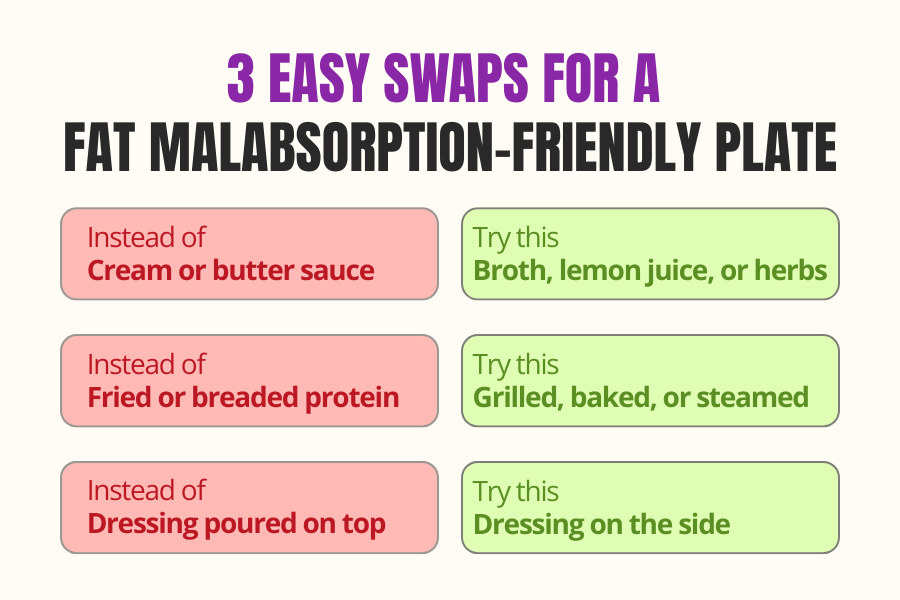
One thing we frequently see in our practice is that people tolerate home-cooked meals much better than restaurant meals. That’s not because restaurant food is inherently unhealthy, but because restaurants often use much more butter, oil, cream, cheese, and other added fats than most people would use in their own kitchens. Even meals that sound relatively healthy can contain enough added fat to exceed your digestive system’s current capacity. When eating out, choosing less fatty foods or asking for sauces, dressings, butter, and oil on the side can make it easier to keep the meal within your current tolerance.
High-Fat Meats
Fatty cuts of beef and pork, bacon, sausage, pepperoni, chicken with the skin on, duck, and heavily marbled steaks all contain significantly more fat than leaner protein choices. Fried chicken and breaded meats can be particularly difficult because they combine naturally fatty foods with added oil from frying.
Full-Fat Dairy
Whole milk, cream, ice cream, cream cheese, sour cream, full-fat yogurt, and large portions of cheese can quickly increase the fat content of a meal. Choosing lower-fat dairy products often allows people to enjoy these foods while placing less demand on their digestion.
Fried Foods and Fast Food
French fries, fried chicken, onion rings, mozzarella sticks, pizza, burgers, and many fast-food meals are among the most common symptom triggers we hear about in our practice. Not only are they high in fat, but restaurant portions often contain far more added oil, butter, and cheese than people realize.
High-Fat Sauces and Condiments
Cream sauces, Alfredo sauce, butter-based sauces, mayonnaise, large amounts of salad dressing, pesto, coconut cream, and generous portions of dips like queso or spinach artichoke dip can add a surprising amount of fat to an otherwise balanced meal.
Desserts and Processed Snack Foods
Pastries, donuts, cookies, cakes, chips, buttery crackers, and many packaged snack foods are often high in both fat and added sugar. While an occasional treat may fit within some people’s tolerance, these foods are generally more likely to trigger symptoms than whole, minimally processed foods.
How to Eat with Fat Malabsorption
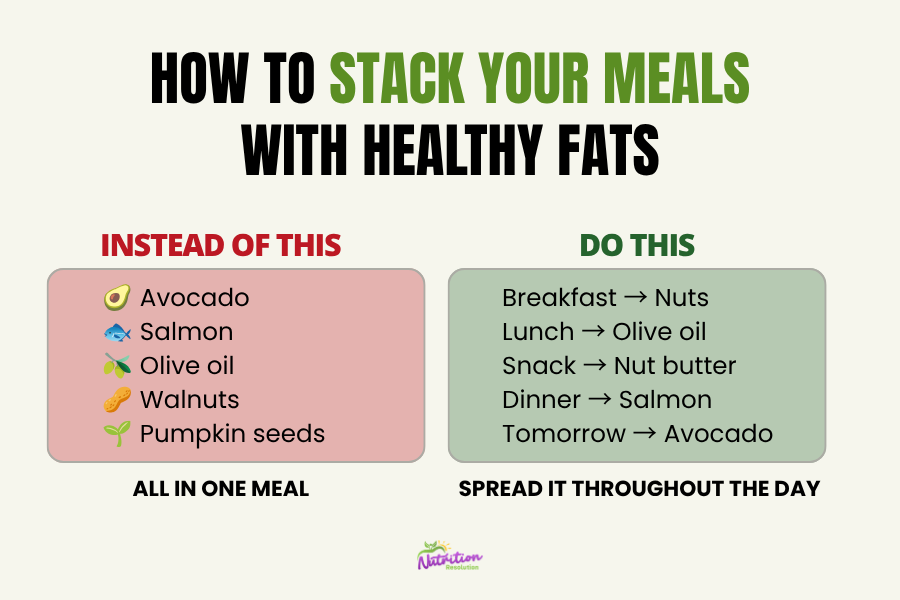
One client was incredibly frustrated because she felt like she was doing everything right. Breakfast was oatmeal topped with walnuts and almond butter. Lunch was a large salad with grilled salmon, avocado, olive oil dressing, and pumpkin seeds. Dinner often included another serving of salmon or steak with roasted vegetables drizzled with olive oil.
On paper, these were all nutritious meals. But when we estimated the fat content together, we realized she was unintentionally eating several healthy high-fat foods together at nearly every meal. None of those foods were the problem by themselves. The issue was that the total fat in each meal consistently exceeded what her digestive system could comfortably handle.
Once we redistributed those same healthy fats throughout the day and adjusted the portions, her symptoms improved dramatically without eliminating any one food entirely.
That’s an important lesson we see over and over again in our practice. With fat malabsorption, it’s often not just what you eat that matters, but how you eat it.
There aren’t universal low fat diet requirements that work for everyone, but the following strategies can help you find an amount and distribution of fat that works for your body. Here are a few things that can make a meaningful difference:
Spread your fat intake throughout the day.
Rather than concentrating most of your fat into one meal, many people tolerate the same total amount much better when it’s distributed more evenly throughout the day.
Avoid “healthy fat stacking.”
Healthy fats are still fats. A meal containing salmon, avocado, olive oil, nuts, and seeds may be incredibly nutritious, but combining several high-fat foods in one sitting can easily exceed your current digestive capacity. Instead of avoiding these foods completely, try spreading them across different meals and snacks.
Don’t ignore ongoing symptoms.
Dietary changes can significantly reduce symptoms, but they don’t explain why you’re experiencing fat malabsorption in the first place. If you continue having greasy stools, chronic diarrhea, unintended weight loss, or vitamin deficiencies, it’s important to work with a healthcare provider to identify the underlying cause rather than simply continuing to restrict your diet.
Nutrients Commonly Deficient with Fat Malabsorption
Fat does more than provide calories. It’s also the vehicle your body uses to absorb several essential vitamins. When fat isn’t being absorbed properly, nutrients often aren’t either.
One of the most frustrating parts of fat malabsorption is that you can be eating a healthy, well-balanced diet and still become deficient over time. We see this regularly in practice. Someone is eating vegetables, lean proteins, dairy, and healthy fats, yet their lab work continues to show low vitamin D, iron deficiency, or declining bone health because their digestive system simply isn’t absorbing what they’re eating.
The nutrients most commonly affected include the fat-soluble vitamins A, D, E, and K. Because these vitamins require fat to be absorbed, they’re often the first to become depleted.
Vitamin A supports vision, immune function, and healthy skin. Vitamin D plays an essential role in bone health and immune regulation. Vitamin E acts as an important antioxidant that protects your cells from oxidative damage, while vitamin K is necessary for normal blood clotting and maintaining strong bones.
Fat malabsorption can also contribute to deficiencies in vitamin B12, iron, calcium, and magnesium. Sometimes that’s because the underlying digestive condition affects absorption more broadly, and sometimes it’s because chronic diarrhea, inflammation, or dietary restrictions gradually reduce overall nutrient intake.
These deficiencies don’t always cause obvious symptoms right away. Fatigue, muscle cramps, easy bruising, poor wound healing, numbness or tingling, bone loss, or frequent infections often develop gradually and are easy to attribute to something else. It’s also important not to assume that lower fat is always better. Potential side effects of a low fat diet that is overly restrictive can include inadequate calorie intake, further weight loss, essential fatty acid deficiency, and difficulty meeting your needs for fat-soluble vitamins.
This is why monitoring your nutrient levels is an important part of treating fat malabsorption. While you and your healthcare team work to identify and address the underlying cause, periodic lab testing can help identify deficiencies early so they can be corrected before they lead to bigger problems. Rather than guessing which supplements you might need, it’s far more effective to base supplementation on your lab results. As fat absorption improves, repeat testing can help confirm that your nutrient levels are recovering and determine whether supplementation is still necessary.
If you’ve been looking for a low fat diet food list PDF, our free Fat Malabsorption Diet Guide includes:
- Foods to eat
- Foods to limit
- A complete 7-day meal plan
- Simple, low-fat recipes
- Grocery shopping list
Download the free Fat Malabsorption Diet Guide.
When Diet Alone Isn’t Enough
One of the hardest parts about fat malabsorption is that it can leave you feeling like you’re constantly doing something wrong.
We see this all the time. Someone develops diarrhea after meals, bloating, weight loss, or greasy stools and naturally assumes the answer is to keep changing what they’re eating. They cut back on fat. They eliminate dairy. Then gluten. Then high-fiber foods. Before long, their diet has become smaller and smaller, yet they still don’t feel like themselves.
One client came to us after several years of being told she had IBS. Every time symptoms persisted, she assumed another food must be the problem, so she kept making her diet more restrictive. She became convinced she just hadn’t found the “right” diet yet.
But food wasn’t the real problem.
We eventually learned she’d never actually been evaluated for pancreatic insufficiency. She’d spent years believing she simply had a “sensitive stomach” and had cycled through gluten-free, dairy-free, low-FODMAP, and countless other elimination diets.
As we worked together, several parts of her history didn’t quite fit the IBS diagnosis she’d been carrying for years. Her greasy stools, weight loss, and difficulty tolerating fat raised our suspicion that something else was going on. We encouraged her to discuss pancreatic insufficiency with her gastroenterologist and ask whether testing, including a fecal elastase test, was appropriate.
When the results confirmed pancreatic insufficiency, years of symptoms suddenly made sense. Once she started pancreatic enzyme replacement therapy and adjusted her diet to match what her body could actually digest, she finally began improving. It wasn’t that she’d been eating the wrong foods all those years. She’d simply been trying to solve the wrong problem.
That’s why we encourage people to think of a fat malabsorption diet as a tool, not a destination.
Diet can reduce symptoms and improve your quality of life while you’re healing, but it shouldn’t become an endless cycle of restriction without asking why fat isn’t being absorbed in the first place.
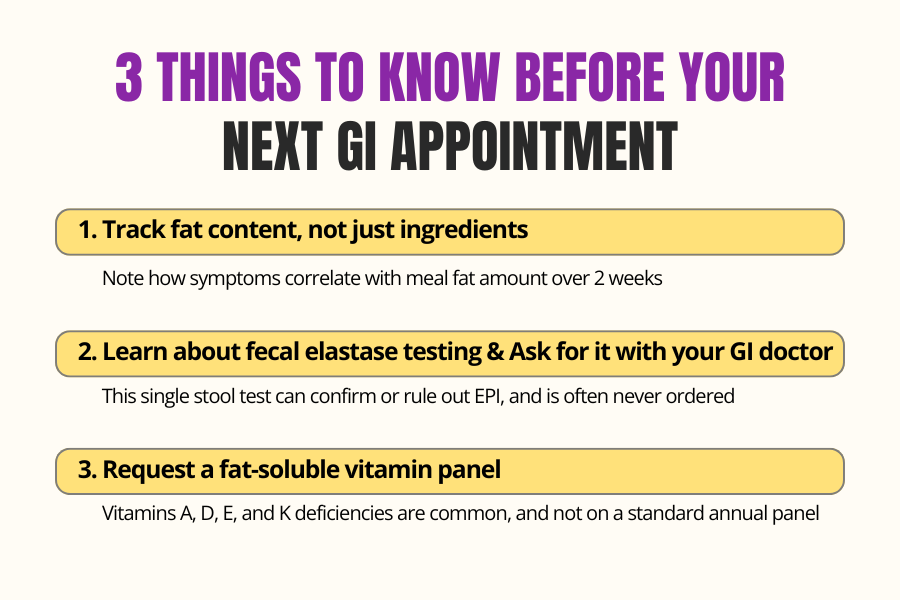
If you’re still experiencing diarrhea, greasy stools, unexplained weight loss, vitamin deficiencies, bloating, or other digestive symptoms despite following a low-fat diet, it’s worth taking a deeper look. There isn’t one single fat malabsorption test that can identify every underlying cause, so the appropriate evaluation depends on your history and symptoms.
Depending on your history and symptoms, that may mean evaluating for conditions like pancreatic insufficiency, celiac disease, SIBO, bile acid malabsorption, or other disorders that interfere with fat digestion and absorption. In our practice, we also frequently evaluate digestive function and the gut microbiome because they can influence how well the digestive system is working as a whole.
Our goal is never to keep adding dietary restrictions. It’s to identify what’s driving the malabsorption so, whenever possible, you can return to eating a more varied and nourishing diet.


