When a Low-Fiber Approach Can Be the Right Tool
If you’ve ever been told that fiber is essential for gut health, but noticed your symptoms don’t improve or feel harder to manage when you try to increase it, you’re not imagining things. During flares or periods of digestive sensitivity, the advice to eat more fiber can feel confusing and even counterproductive. That disconnect leaves many people second-guessing food choices and feeling stuck, especially when they’re searching for a clear list of foods low in fiber they can rely on.
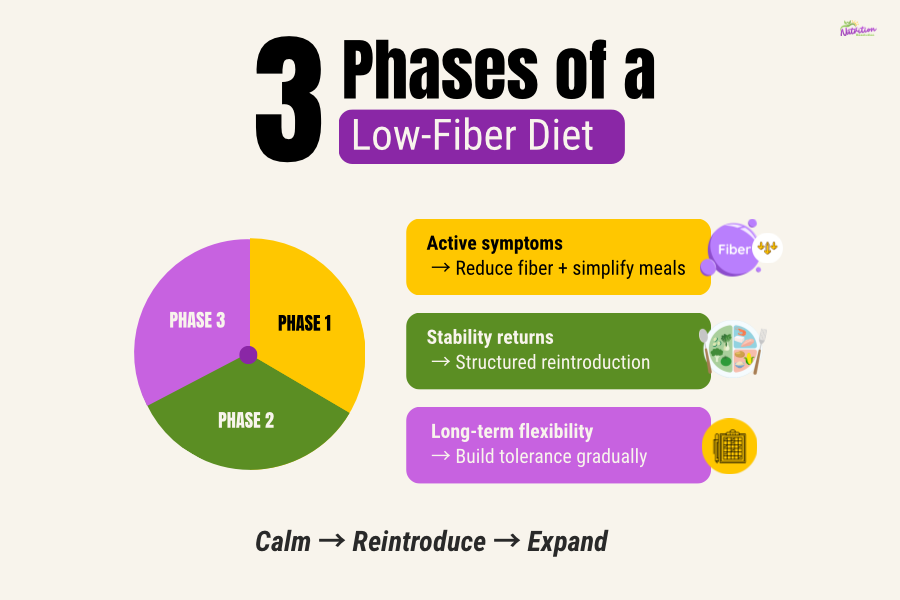
In certain situations, temporarily lowering fiber can help reduce irritation and make digestion feel calmer and more predictable. This isn’t disease-specific, isn’t the same as a low-residue diet, and isn’t meant to be permanent. The low fiber food list is a short-term tool used to help symptoms settle, so there’s a stable foundation to build from.
Because decision-making around food can feel overwhelming during this phase, having a clear, printable low-fiber food list can make things much easier. This article walks through when a low-fiber approach can be helpful, what foods are typically included or limited, and how to move forward once symptoms improve, along with a downloadable low fiber food list PDF to support you along the way.
Looking for a Low Fiber Food List You Can Print?
If you’re searching for a list of low fiber foods you can actually use during a flare or recovery phase, we’ve created a low fiber food list PDF that organizes foods into eat often, limit, and avoid categories. It’s designed to reduce guesswork and decision fatigue when digestion feels sensitive.
What a Low-Fiber Diet Actually Means
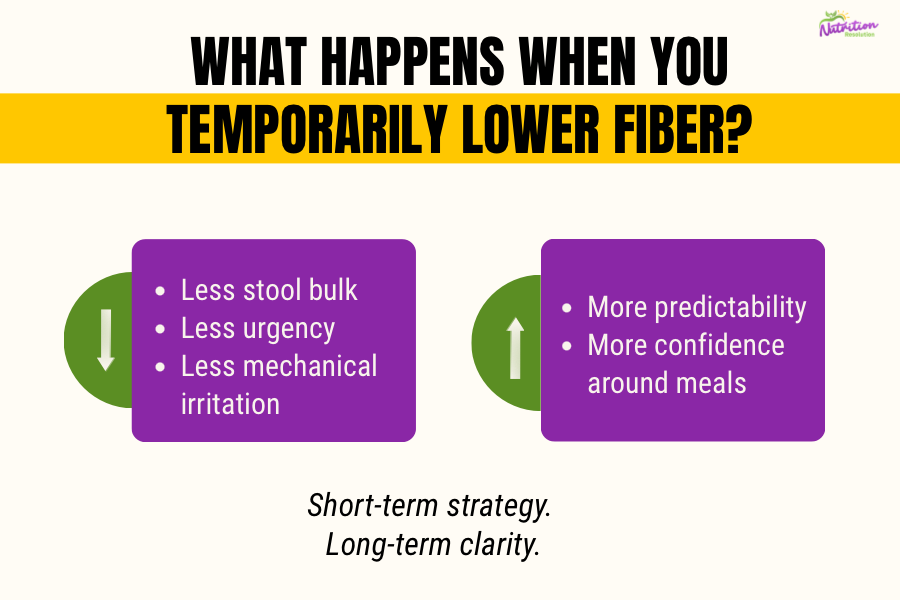
When we talk about a low-fiber diet, we’re really just talking about temporarily choosing foods that are easier for your gut to handle. Fiber adds bulk to stool and increases stimulation in the digestive tract, which is great when your gut is calm and functioning well. But when things are irritated, inflamed, or sensitive, that same bulk and stimulation can feel like too much and actually worsen symptoms instead of helping.
Lowering fiber for a period of time can reduce stool bulk and digestive workload, giving the gut a chance to settle, especially when larger, bulkier stools or more frequent bowel movements are part of what’s triggering discomfort. That doesn’t mean you’re eating poorly or missing out on nourishment. A low-fiber approach can still include adequate protein, calories, fats, and micronutrients when it’s done intentionally, even though it may look different from how people usually think about low fiber diet foods.
It’s also worth clearing up a common point of confusion. Low fiber and the low residue diet are related concepts and are sometimes used in similar clinical situations, but they’re not interchangeable. Low residue is typically used as a more medical term and generally refers to minimizing undigested material in the stool, while low fiber is a broader, more practical way of reducing bulk and stimulation. For the purposes of this article, we’re staying focused on low fiber as a short-term tool, not a permanent or disease-specific plan.
Situations Where Temporarily Lowering Fiber Is Often Helpful
There are certain situations where temporarily lowering fiber tends to be more helpful than continuing to push it, and this is something we recognize through patterns we see with clients every day. Rather than being about a specific diagnosis, it’s about how the gut is responding in that moment and whether added bulk and stimulation are helping or making things harder.
Temporarily lowering fiber is often useful:
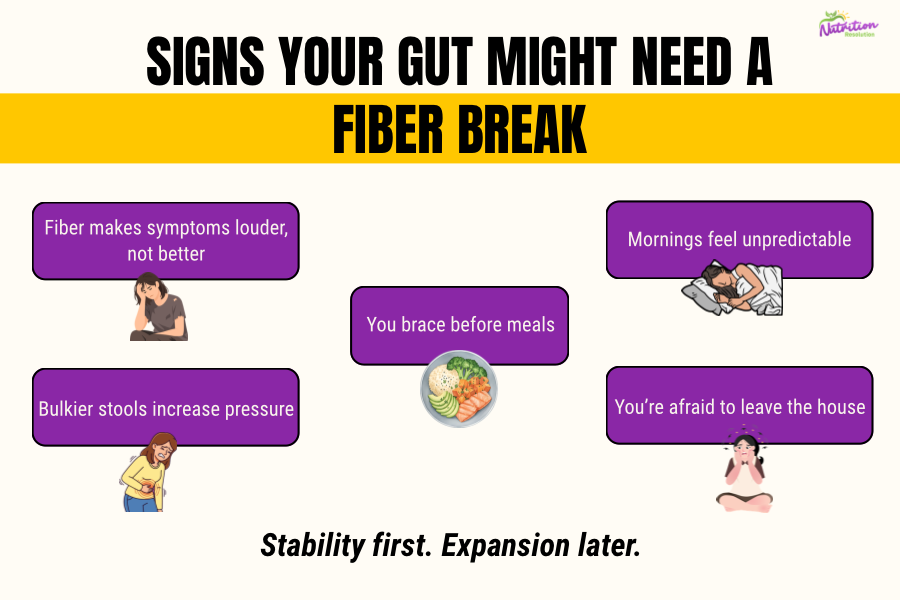
- During active symptoms like diarrhea, urgency, cramping, or pain, when added bulk intensifies discomfort
- After surgery or procedures, when digestion feels sensitive and simpler foods are better tolerated
- When larger or bulkier stools cause pressure, pain, or a sense of irritation rather than relief
- When repeatedly increasing fiber leads to a heavy, unsettled, or backed-up feeling instead of smoother digestion
One client we worked with had a long history of digestive issues, but a recent stretch of worsening urgency and loose stools was what finally made things feel unmanageable. She told us mornings felt like a gamble — she’d wake up extra early to see how her gut was going to behave before deciding whether she could even go into work. She stopped eating breakfast because she was worried it would trigger another urgent trip to the bathroom, and she was constantly anxious about having an accident or needing to call in sick.
At that point, we advised her to follow a low-fiber approach for a few weeks to help calm things down. That meant pulling back on bulkier foods and shifting toward simpler meals — things like eggs with white toast in the morning, rice with chicken or fish for lunch, and well-cooked vegetables in smaller portions instead of raw salads. Within a couple of weeks, her bowel movements became less frequent, more formed, and far more predictable, which made a huge difference in how safe she felt around food.
Once her symptoms settled and that constant anxiety eased, we finally had a starting point. From there, we could begin rebuilding fiber slowly and intentionally, layering foods back in in a way that supported her overall gut health and resilience instead of sending her right back into another flare.
Foods Commonly Included on a Low-Fiber Diet
When we talk about foods that are commonly included on a low-fiber diet, the focus isn’t on creating a rigid list of low fiber foods or labeling things as universally safe or unsafe. It’s more about choosing options that are gentler on the digestive tract in terms of texture, preparation, and portion size. How a food is cooked and how much of it you eat often matters just as much as the food itself during this phase.
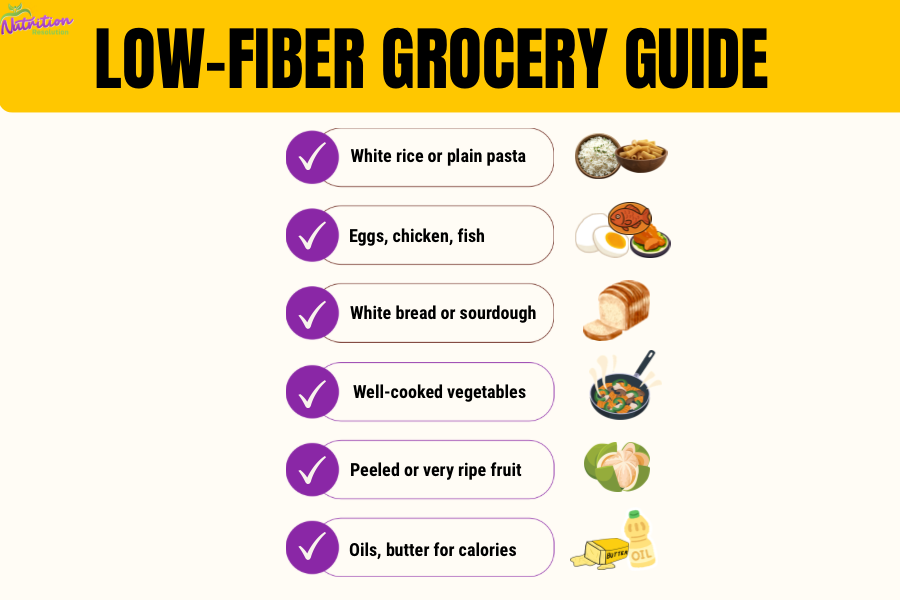
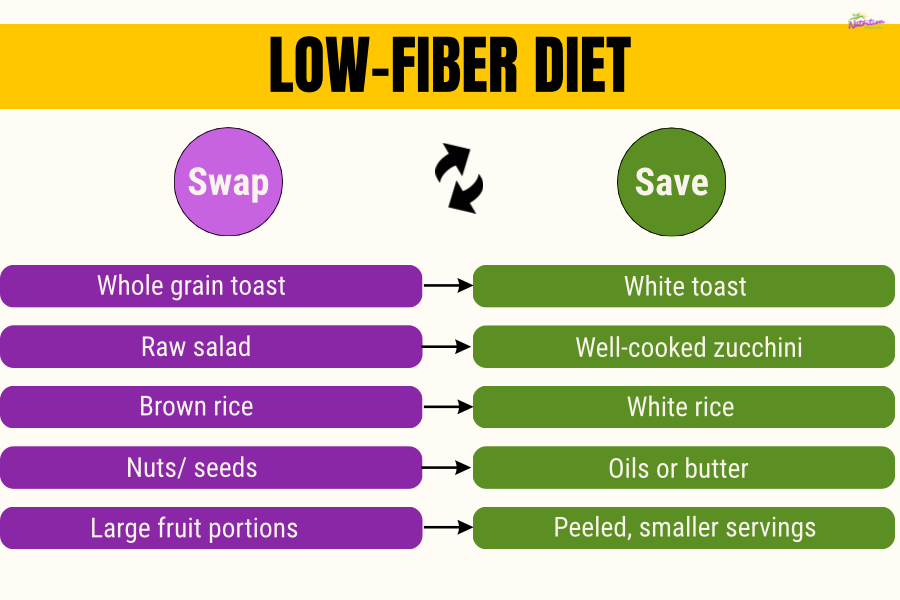
This usually means leaning on refined grains and starches that digest more easily, like white rice, white bread, or plain pasta. Proteins tend to be better tolerated when they’re tender and simply prepared — things like eggs, fish, chicken, or turkey without heavy coatings or added roughage. Low-fiber fruits and vegetables can still have a place, but they’re typically better tolerated when they’re well-cooked and eaten in smaller amounts rather than raw or fibrous. Many people find that vegetables low in fiber, such as well-cooked zucchini or peeled squash, and low fiber fruits without skins or seeds feel gentler during this phase. Fats are included in ways that add calories and satisfaction without adding bulk to stool, like oils or butter rather than nuts, seeds, or high-fiber fat sources.
The goal here isn’t perfection or restriction. It’s choosing foods that allow digestion to feel calmer and more predictable while symptoms settle, so eating doesn’t feel like a constant experiment.
Need a Low-Fiber Meal Plan to Follow Right Now?
This downloadable guide includes low-fiber diet menu examples and a low fiber diet meal plan PDF designed for short-term use when digestion needs a break.
Foods Commonly Limited or Avoided (Temporarily)
During a low-fiber phase, the foods that tend to be limited or avoided are usually the ones that add the most bulk or mechanical work for the gut. These are foods that are perfectly healthy in other contexts, but can be harder to tolerate when digestion is irritated or sensitive.
This commonly includes raw vegetables and salads, foods with skins or seeds, and tougher plant fibers that don’t break down easily. Larger portions of legumes, whole grains, bran, and nuts or seeds also tend to increase stool volume and can worsen urgency, discomfort, or unpredictability during this phase.
The key thing to remember is that these foods aren’t “bad,” and they aren’t being avoided forever. They’re simply more stimulating to the bowel or increase stool bulk during certain phases, which is why we temporarily pull them back and then reintroduce them gradually once symptoms have settled and the gut is ready.
How Long a Low-Fiber Diet Is Typically Used
A low-fiber diet is typically used as a short-term tool, not a long-term solution. In most cases, the goal is to give the gut a window to calm down, reduce stool volume, and regain predictability before moving on. We usually look for signs like more formed bowel movements, fewer urgent trips to the bathroom, less irritation during and between bowel movements, and a general sense that digestion feels steadier before even thinking about adding fiber back in.
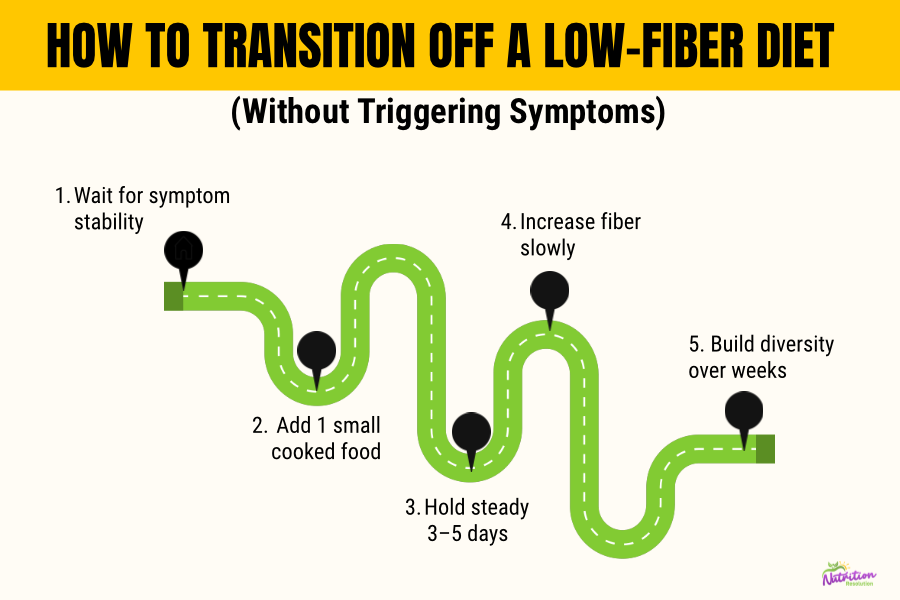
Reintroducing fiber isn’t about flipping a switch or suddenly returning to a high-fiber diet. It’s a gradual process that focuses on small increases, cooked and softer sources first — often starting with fruits and vegetables low in fiber — and enough time between changes to see how the body responds. This is the same step-by-step approach we use when rebuilding fiber tolerance, and it’s what helps expand the diet without triggering another setback.
One client who stands out, Emily, followed a low-fiber approach for about four weeks while things settled. When it was time to reintroduce fiber, she was nervous. She kept asking, “what if this puts me right back where I started?” So we didn’t jump to raw vegetables or whole grains. We started with a few forkfuls of well-cooked zucchini at dinner, kept everything else the same for several days, and waited.
Nothing happened — which was the point. After that, we added peeled pear, cooked or very ripe, in small portions, then gradually increased cooked vegetables. Emily said the biggest shift wasn’t just her digestion, it was her confidence. She stopped bracing for symptoms after every meal because she understood the plan and knew exactly what she was testing and why.
Over time, that structure allowed her diet to expand without fear. She wasn’t stuck low fiber, but she also wasn’t gambling with her gut, and that’s what made rebuilding tolerance actually work.
Why a Clear Low-Fiber Food List Can Be So Helpful
When symptoms are active, decision fatigue is very real. Even simple questions like what can I eat for breakfast or what should I put on my grocery list can start to feel overwhelming, especially when every choice feels like it might make things worse. That constant mental load adds stress at a time when the body is already struggling.
On top of that, online advice about low-fiber eating is often conflicting and confusing. One low fiber foods list says a food is fine, another says to avoid it, and suddenly people are second-guessing every bite. A clear, straightforward low-fiber food list helps cut through that noise, reducing anxiety and lowering the chance of accidentally choosing foods that aggravate symptoms during this phase.
That’s also where a printable PDF becomes especially useful. Having a simple low fiber food chart gives you something concrete to reference while grocery shopping, to share with a partner or caregiver, or to keep on hand for flare planning, so you’re not relying on memory or scrolling through search results when you’re not feeling your best.
Download: Low Fiber Food List PDF + 7-Day Meal Plan
To make this phase easier to navigate, we created a downloadable Low Fiber Food List PDF that brings everything together in one place. It’s designed to be practical and calming, not overwhelming — something you can actually use when symptoms are active.
The PDF includes:
- A printable low fiber food list
- Foods grouped into eat often, limit, and avoid categories
- A gentle 7-day meal plan to take the guesswork out of meals
This resource is meant to support you for a short period of time while symptoms settle, not to become a long-term way of eating. The goal is to reduce stress around food now, so you have a stable foundation to build from when it’s time to expand again.
A Final Note on Fiber and Long-Term Gut Health
Fiber does play an important role in long-term gut health, and following a low-fiber approach doesn’t change that. It simply acknowledges that there are times when the gut needs support and stability before it’s ready for more stimulation. Timing matters, and so does tolerance. What works well for the gut later on may not be appropriate in the middle of a flare or recovery phase.
The bigger picture is personalization. Gut health isn’t about forcing the body into a one-size-fits-all plan, but about meeting it where it is and adjusting as things change. If you’re in a season where lower fiber feels better, that doesn’t mean you’re doing anything wrong; it means you’re listening.
With the right support and a step-by-step approach, most people are able to move forward from this phase and rebuild flexibility with food over time. That process doesn’t have to be rushed, and it doesn’t have to be perfect to be effective.
Frequently Asked Questions (FAQ)
Can I eat salad on a low fiber diet?
This is one of the most common questions we hear. In most cases, raw salads are limited during a low-fiber phase because raw vegetables add bulk and mechanical work for the gut. Once symptoms settle, salads are often one of the first foods to be reintroduced gradually, starting with small portions and paying close attention to tolerance.
What vegetables are low in fiber and usually easier to tolerate?
During a low-fiber phase, vegetables are typically better tolerated when they’re well-cooked, peeled, and eaten in smaller portions. Low fiber vegetables tend to be those without tough skins, seeds, or fibrous textures, and many people find that vegetables with low fiber feel gentler when digestion is sensitive. Rather than memorizing rules, focusing on preparation and portion size matters more than finding “perfect” foods.
If you’re looking for a clear low fiber vegetables list or wondering which low fiber veggies are usually easier to start with, this printable guide organizes these options in a simple, practical way.
Do I need to avoid fiber completely?
No, a low-fiber approach doesn’t mean eliminating fiber entirely or eating only no fiber foods. The goal is usually to reduce overall fiber load and stool bulk, not to avoid fiber at all costs. Small amounts of lower-fiber foods can still fit, especially when they’re cooked and eaten in appropriate portions.
How long do people usually stay on a low-fiber diet?
Most people use a low-fiber approach short-term, often for a few weeks, while symptoms calm and digestion becomes more predictable. We typically look for signs like more formed bowel movements, less urgency, and reduced irritation before beginning a gradual reintroduction of fiber.
Can this low fiber food list PDF be used for colonoscopy prep?
Some people use a low fiber food list when preparing for a colonoscopy, since many providers recommend temporarily reducing fiber beforehand. Instructions can vary, so it’s important to always follow the specific guidance given by your healthcare provider. This guide can be a helpful reference for understanding low-fiber food choices, but it shouldn’t replace medical instructions.
Is a low-fiber diet safe if I’m already losing weight or struggling to eat enough?
This is an important consideration. A low-fiber diet can still be nutritionally adequate when it’s planned intentionally, with enough calories, protein, and fats to support your body. If weight loss or low intake is already a concern, working with guidance can help ensure the approach supports healing rather than adding stress.